Advanced Diploma in Telehealth & Remote Healthcare Management
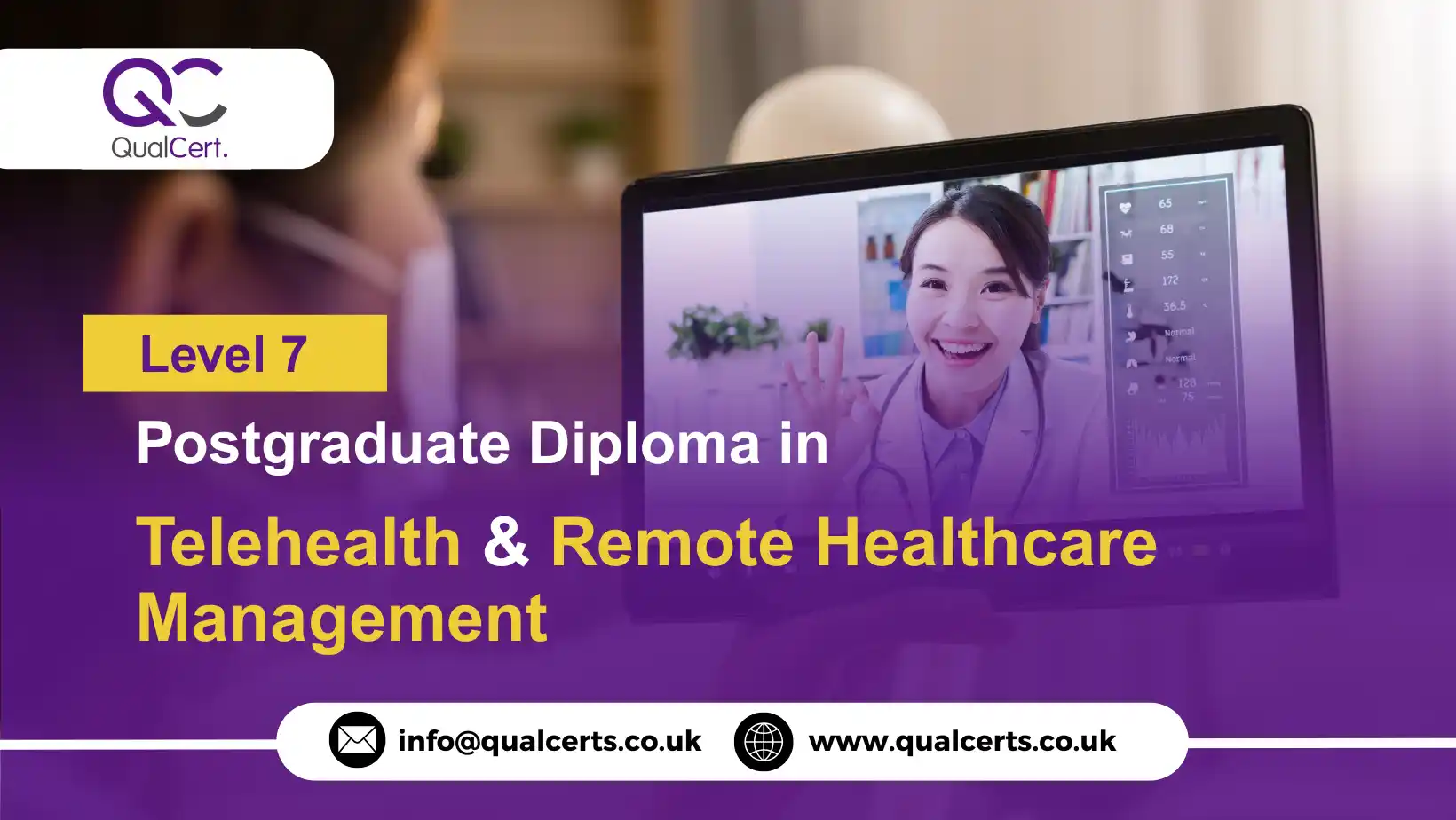
The QualCert Level 7 Postgraduate Diploma in Telehealth and Remote Healthcare Management equips healthcare professionals with the expertise needed to lead and innovate in this dynamic field. This advanced qualification is designed to meet the growing demand for skilled leaders who can effectively manage remote healthcare delivery and ensure quality, accessibility, and efficiency.
Telehealth has transformed the way healthcare is delivered, enabling patients to access medical consultations, monitoring, and support from the comfort of their homes. The integration of digital technologies in healthcare offers numerous benefits, including improved patient engagement, cost savings, and expanded reach to underserved populations. However, it also presents unique challenges in terms of regulation, data security, and service coordination.
This postgraduate diploma addresses these critical areas, providing learners with a comprehensive understanding of telehealth systems, remote patient management, and digital health strategies. Students explore essential topics such as health informatics, virtual care models, legal and ethical considerations, and the use of emerging technologies in healthcare delivery. The course emphasises practical skills and strategic leadership, preparing graduates to implement and manage telehealth programmes effectively.
Comprising six units, each worth 20 credits, the programme totals 120 credits with 600 guided learning hours and 1200 total qualification hours. It is designed for healthcare practitioners, managers, and policy makers aiming to enhance their capabilities in telehealth and remote care management.
Graduates of this diploma will be well-positioned to lead telehealth initiatives in diverse healthcare settings, including hospitals, community care, primary care, and specialised remote services. The qualification supports career progression into senior management roles focused on digital health innovation and patient-centred remote care.
Program Framework
The QualCert Level 7 Postgraduate Diploma in Telehealth and Remote Healthcare Management, offers 120 Credits, requiring a Total Qualification Time (TQT) of 1200 hours, including 600 Guided Learning Hours (GLH).
| Unit Ref# | Unit Title | Credit | GLH | TQT |
| QC280108-1 | Foundations of Telehealth and Remote Healthcare | 20 | 100 | 200 |
| QC280108-2 | Digital Health Technologies and Innovation | 20 | 100 | 200 |
| QC280108-3 | Telehealth Service Design and Delivery | 20 | 100 | 200 |
| QC280108-4 | Legal, Ethical and Regulatory Considerations in Telehealth | 20 | 100 | 200 |
| QC280108-5 | Data Management, Security and Privacy in Remote Healthcare | 20 | 100 | 200 |
| QC280108-6 | Leadership and Change Management in Telehealth Projects | 20 | 100 | 200 |
Eligibility Criteria
This advanced postgraduate qualification is designed for professionals aiming to lead digital healthcare delivery and remote patient care systems. Applicants should meet the following requirements:
- Minimum Age: Learners must be at least 21 years old at the time of enrollment.
- Educational Background: A recognized Level 6 qualification (Bachelor’s degree or equivalent) in healthcare, public health, health management, IT, or a related field is recommended. Candidates with relevant professional qualifications may also be considered.
- Experience: Prior experience in healthcare services, digital health, telemedicine, IT systems, or healthcare administration is highly desirable to support advanced learning.
- Language Proficiency: Learners must have strong English language skills in reading, writing, and communication to effectively engage with course materials, digital platforms, and assessments.
Proficiency Targets
Foundations of Telehealth and Remote Healthcare
- Demonstrate a comprehensive understanding of telehealth concepts and models
- Analyse the role and impact of remote healthcare in modern health systems
- Evaluate different approaches to delivering remote healthcare services
Digital Health Technologies and Innovation
- Identify and assess emerging digital technologies relevant to telehealth
- Critically appraise the application of innovative tools in remote healthcare delivery
- Develop strategies for integrating technology to enhance patient care
Telehealth Service Design and Delivery
- Design effective telehealth service models tailored to diverse healthcare needs
- Apply best practices in implementing and managing telehealth programmes
- Assess service delivery challenges and develop solutions to optimise care
Legal, Ethical and Regulatory Considerations in Telehealth
- Analyse key legal and regulatory frameworks affecting telehealth
- Evaluate ethical issues related to remote healthcare provision
- Develop compliance strategies to ensure adherence to laws and standards
Data Management, Security and Privacy in Remote Healthcare
- Understand principles of data governance and patient confidentiality
- Implement data security measures to protect health information
- Assess risks and solutions related to data privacy in telehealth systems
Leadership and Change Management in Telehealth Projects
- Demonstrate leadership skills to drive telehealth initiatives successfully
- Develop change management plans to support telehealth adoption
- Evaluate project outcomes and promote continuous improvement in telehealth services
Ideal Participants
- Healthcare professionals involved in delivering or managing telehealth and remote healthcare services
- Healthcare managers and administrators seeking to develop leadership skills in digital health
- Clinicians aiming to expand their expertise in remote patient care and digital health technologies
- IT specialists working within healthcare organisations focused on telehealth solutions
- Policy makers and healthcare planners responsible for implementing telehealth strategies
- Professionals working in hospitals, primary care, community health, and health technology sectors
- Individuals aspiring to lead innovation and improve patient access through telehealth services
Assessment and Verification
Assessment Framework :
This qualification consists of 6 mandatory assignments designed to assess the learner’s understanding and practical application of the required skills and knowledge. The key elements of the assessment framework include:
- Comprehensive Assignment Structure:
The assignments are designed to cover a range of topics within the qualification, ensuring that learners demonstrate their competence across all essential areas. - Pass Requirement:
Learners must successfully complete all 6 assignments to meet the requirements for certification. Each assignment must meet the specified criteria and demonstrate sufficient understanding and application of the subject matter. - Assessment Process:
Each assignment is reviewed and marked by a qualified assessor, with feedback provided to support learner development. - Final Completion Criteria:
The successful completion of all assignments is necessary for certification. Only learners who meet the required standards across all assignments will be awarded the qualification.
Quality Assurance & Verification:
QualCert applies a rigorous, multi-layered quality assurance system to ensure the reliability, consistency, and integrity of all assessments and results.
1. Internal Quality Assurance (IQA)
Conducted by the approved training centre:
- Assignment Evaluation:
Centre-approved Assessors and Internal Quality Assurers (IQAs) review the assignments to ensure they meet the assessment criteria and learning outcomes. - Standardisation:
Regular standardisation sessions are held to maintain consistency in assessment and marking practices across all centre staff. - Feedback & Support:
IQAs ensure that learners receive constructive feedback to aid their progress and improve future submissions.
2. External Quality Assurance (EQA)
Conducted by QualCert:
- Independent Verification:
QualCert’s External Quality Assurers (EQAs) verify the completed assignments and assess the quality and fairness of the marking process. - Centre Audits:
EQAs audit the centre’s compliance with QualCert’s quality assurance standards, reviewing assessment practices, learner records, and overall delivery. - Final Certification:
After satisfying the EQA’s verification process, QualCert will officially issue the certification to the learner.
QualCert delivers all qualifications exclusively through its network of officially approved training centres.
For registration or further information, please contact your nearest approved training centre.