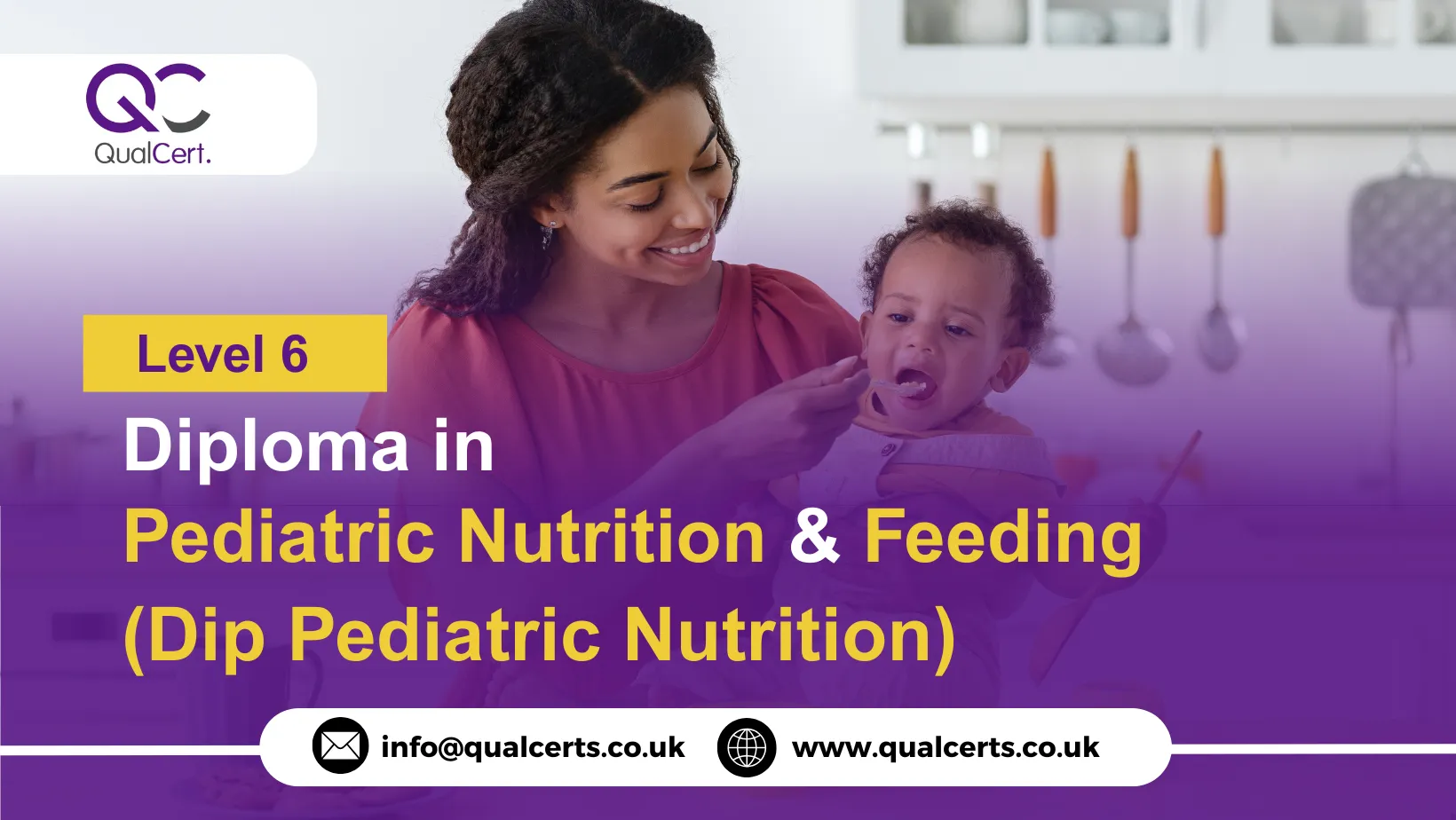
The QualCert Level 6 Diploma in Pediatric Nutrition and Feeding (Dip Pediatric Nutrition) is an advanced qualification designed to equip learners with specialist knowledge and practical expertise in child nutrition and feeding practices. This programme addresses the vital role of nutrition in the growth, development, and wellbeing of infants, children, and adolescents, while also covering clinical considerations in managing childhood feeding difficulties and nutrition-related health conditions.
Developed for professionals who wish to enhance their career prospects, expand their expertise, and strengthen their Continuing Professional Development (CPD), this diploma provides a comprehensive framework that integrates scientific research with applied practice. Learners will explore areas such as early life nutrition, weaning strategies, paediatric dietary planning, clinical nutrition interventions, and the impact of nutrition on childhood development.
This qualification is particularly valuable for those working in healthcare, dietetics, education, childcare, and public health, where advanced knowledge of paediatric nutrition can directly improve outcomes. By engaging with this diploma, learners will gain the ability to critically evaluate research, apply evidence-based strategies, and develop tailored nutrition and feeding plans that meet the unique needs of children at different stages of growth.
Centres delivering this qualification must ensure that they have competent and qualified staff, alongside the required facilities, learning resources, and support systems to maintain the highest standards of training and assessment. This ensures that every learner benefits from a high-quality educational experience, combining theoretical insight with practical application.
The QualCert Level 6 Diploma in Paediatric Nutrition and Feeding prepares learners to become confident, skilled professionals capable of making a positive impact on child health, wellbeing, and nutritional care across diverse settings.
Course Contents of QualCert Level 6 Diploma in Pediatric Nutrition and Feeding (Dip Pediatric Nutrition):
The QualCert Level 6 Diploma in Pediatric Nutrition and Feeding (Dip Pediatric Nutrition), consists of a structured set of study units designed to provide learners with in-depth and comprehensive knowledge. The qualification includes a total of 1200 Total Qualification Time (TQT), 600 Guided Learning Hours (GLH), and awards 120 credits.
| Unit Ref# | Unit Title | Credits | GLH | TQT |
| QC29095- 1 | Foundations of Paediatric Nutrition | 20 | 100 | 200 |
| QC29095-2 | Infant Feeding and Early Life Nutrition | 20 | 100 | 200 |
| QC29095-3 | Clinical Paediatric Nutrition and Feeding Disorders | 20 | 100 | 200 |
| QC29095-4 | Public Health and Community Paediatric Nutrition | 20 | 100 | 200 |
| QC29095-5 | Nutritional Assessment and Dietary Planning for Children | 20 | 100 | 200 |
| QC29095-6 | Research Project in Paediatric Nutrition and Feeding | 20 | 100 | 200 |
Entry Requirements for the QualCert Level 6 Diploma in Pediatric Nutrition and Feeding (Dip Pediatric Nutrition):
Minimum Age:
- Learners must be at least 19 years old at the time of registration.
Educational Background:
- A recognised Level 5 qualification or equivalent in nutrition, dietetics, healthcare, childcare, public health, or a related discipline is recommended. Applicants with professional certifications in relevant fields may also be considered.
Experience:
- Previous workplace experience in healthcare, paediatrics, dietetics, childcare, education, or community health is desirable to support practical application of learning.
Language Proficiency:
- Learners must demonstrate good English language skills (reading, writing, speaking, and listening) to successfully engage with course materials and complete assessments.
Commitment to CPD:
- Applicants should have a strong interest in Continuing Professional Development (CPD) and be committed to enhancing their expertise in paediatric nutrition and feeding.
Access to Required Resources:
- Learners must have reliable access to digital learning tools, academic resources, and an internet-enabled device, as well as opportunities to apply knowledge in professional or case study contexts.
These requirements ensure that learners can fully engage with the qualification and gain the advanced skills necessary to progress in paediatric nutrition, feeding, and child health.
Learning Outcomes for the QualCert Level 6 Diploma in Pediatric Nutrition and Feeding (Dip Pediatric Nutrition):
Foundations of Paediatric Nutrition
- Analyse the nutritional requirements of infants, children, and adolescents at different growth stages
- Evaluate the role of macronutrients and micronutrients in child development
- Critically assess the impact of poor nutrition on paediatric health outcomes
- Apply evidence-based principles to support healthy growth and wellbeing
- Examine cultural and social influences on paediatric nutrition practices
Infant Feeding and Early Life Nutrition
- Evaluate the benefits and challenges of breastfeeding and formula feeding
- Analyse strategies for safe and effective complementary feeding and weaning
- Assess the long-term health implications of early life nutrition
- Apply best practices in supporting parents and caregivers with infant feeding
- Critically review evidence linking early nutrition to chronic disease prevention
Clinical Paediatric Nutrition and Feeding Disorders
- Identify and assess common paediatric feeding disorders and nutrition-related conditions
- Develop dietary strategies to manage allergies, intolerances, and metabolic disorders
- Evaluate interventions for obesity, malnutrition, and growth faltering in children
- Apply evidence-based approaches to clinical case studies in paediatric nutrition
- Critically examine the role of multidisciplinary teams in managing complex feeding issues
Public Health and Community Paediatric Nutrition
- Assess the impact of public health policies and school nutrition programmes on child wellbeing
- Evaluate global and community initiatives addressing paediatric malnutrition and obesity
- Develop strategies for promoting healthy eating behaviours among children and families
- Analyse barriers to implementing effective nutrition interventions in diverse communities
- Apply evidence-based frameworks to design child-focused nutrition campaigns
Nutritional Assessment and Dietary Planning for Children
- Demonstrate skills in assessing dietary intake and nutritional status in children
- Develop tailored dietary plans to meet individual paediatric nutritional needs
- Evaluate the role of growth charts, anthropometric measures, and clinical indicators
- Apply nutritional guidelines to support children with special health or developmental needs
- Critically assess the effectiveness of dietary plans through monitoring and review
Research Project in Paediatric Nutrition and Feeding
- Identify a relevant research topic within paediatric nutrition or feeding practices
- Apply appropriate research methodologies and ethical considerations
- Collect, analyse, and interpret data to address research questions
- Critically evaluate findings in relation to existing scientific evidence
- Produce a structured dissertation demonstrating advanced research and problem-solving skills
The Course is ideal for :
- Nutritionists, dietitians, and healthcare professionals seeking advanced expertise in paediatric nutrition and feeding
- Paediatric nurses, child health practitioners, and allied health professionals working with infants, children, and adolescents
- Professionals in public health, education, and childcare aiming to support healthy growth and development through nutrition
- Researchers and food scientists interested in child nutrition, feeding disorders, and evidence-based interventions
- Policy makers and programme managers working in child health, school nutrition, and community health initiatives
- Individuals passionate about enhancing their Continuing Professional Development (CPD) in paediatric nutrition and clinical dietetics
- Learners aspiring to progress into senior roles within healthcare, paediatric dietetics, or child-focused nutrition services
Centres approved to deliver the QualCert Level 6 Diploma in Paediatric Nutrition and Feeding must meet the following requirements to maintain high-quality teaching, learning, and assessment:
- Qualified Staff: Trainers and assessors must hold relevant academic and professional qualifications in nutrition, dietetics, paediatrics, or healthcare, with proven teaching and assessment competence.
- Assessment Expertise: Assessors must demonstrate strong knowledge of Level 6 standards, research supervision, and the ability to evaluate advanced assignments and projects.
- Learning Resources: Centres must provide access to updated textbooks, clinical guidelines, digital platforms, and academic journals in paediatric nutrition and feeding.
- Facilities and Equipment: Adequate classroom environments, IT facilities, and research tools should be available to support theoretical and practical learning.
- Quality Assurance: Robust internal verification and quality assurance systems must be in place to ensure fairness, consistency, and compliance in assessment decisions.
- Learner Support: Centres must provide guidance, mentoring, and pastoral support to help learners complete their studies and research successfully.
- Commitment to CPD: All staff involved in delivering and assessing this qualification should actively engage in Continuing Professional Development (CPD) to maintain professional standards.
- Compliance: Centres must adhere to all QualCert regulations, policies, and assessment requirements to ensure consistent and high-quality delivery.