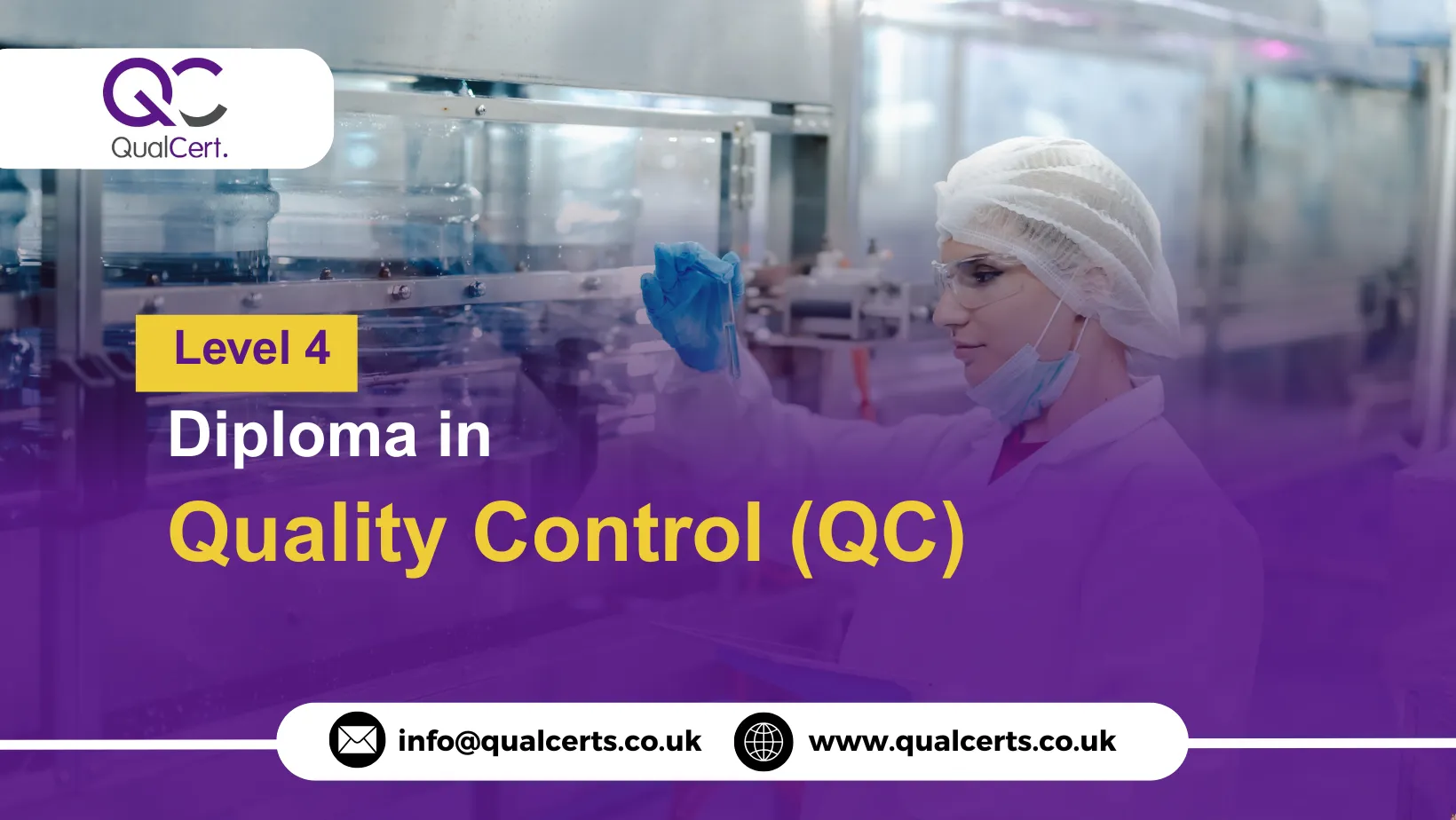
Level 4 Quality Control Diploma – Professional Skills
The QualCert Level 4 Diploma in Quality Control (QC) is a specialised qualification designed to strengthen the knowledge and practical skills of professionals working in quality management and control roles. The programme equips learners with advanced quality control techniques, tools, and methodologies required to maintain high standards across organisational processes. Whether enhancing existing expertise or transitioning into a quality-focused role, this diploma provides a strong foundation in quality assurance, compliance, and continuous improvement practices.
This diploma is tailored for individuals seeking an in-depth understanding of quality control principles across manufacturing, production, and service environments. Learners gain practical insight into inspection and testing methods, process control, regulatory compliance, and performance monitoring. The course also emphasises problem-solving, risk-based thinking, and continuous improvement, enabling participants to support operational efficiency and consistency while contributing to organisational excellence.
Completing the QualCert Level 4 Diploma in Quality Control offers significant career benefits and progression opportunities. The qualification is recognised across multiple industries, enhancing employability and supporting advancement into supervisory or managerial roles. Graduates develop strong analytical, decision-making, and leadership skills, preparing them for positions such as Quality Control Manager, Quality Assurance Lead, or Continuous Improvement Specialist. It also provides a pathway to further professional development in areas such as Lean Six Sigma, Quality Management, or industry-specific consultancy roles.
Program Framework
This QualCert Level 4 Diploma in Quality Control (QC) course, consist of 72 Credits, requiring a Total Qualification Time (TQT) of 450 hours, including 270 Guided Learning Hours (GLH). It is designed for efficient and focused skill development in Quality Control (QC).
| Units Ref# | Unit Title | Credit | GLH | TQT |
| QC01010 – 1 | Advanced Structural Quality Control | 12 | 45 | 75 |
| QC01010 – 2 | Non-Destructive Testing (NDT) Techniques | 12 | 45 | 75 |
| QC01010 – 3 | Quality Control for Large-Scale Projects | 12 | 45 | 75 |
| QC01010 – 4 | Advanced Material Testing and Analysis | 12 | 45 | 75 |
| QC01010 – 5 | Management of Quality in Construction Projects | 12 | 45 | 75 |
| QC01010 – 6 | Legal and Ethical Issues in QC Practices | 12 | 45 | 75 |
Eligibility Criteria
This course is designed to be accessible, career-focused, and industry-relevant, providing learners with the practical knowledge needed to succeed in quality control and quality management roles. It is suitable for both aspiring and experienced professionals seeking formal recognition and skill enhancement.
- Minimum Age: Applicants must be at least 18 years old to enrol in this training program.
- Educational Background: A Level 1 qualification or equivalent secondary education is recommended. Applicants with academic or vocational backgrounds in quality management, business administration, health & safety, environmental management, or compliance are well suited to this course.
- Experience: Basic knowledge of ISO management systems is recommended. This course is suitable for individuals who have completed a Level 1 ISO audit qualification or have prior exposure to internal auditing, quality assurance, inspection, or compliance roles.
- Language Proficiency: Strong command of English in reading, writing, and speaking is essential to understand ISO standards and technical documentation.
Core Achievements
Upon successful completion of the QualCert Level 4 Diploma in Quality Control (QC), students will be able to:
Advanced Structural Quality Control
- Demonstrate the ability to inspect and evaluate structural components for compliance with design specifications.
- Apply advanced techniques to monitor structural integrity in construction projects.
- Identify potential structural deficiencies and recommend corrective actions.
- Analyze structural performance data to ensure safety and reliability.
- Implement best practices for maintaining long-term structural durability.
Non-Destructive Testing (NDT) Techniques
- Perform various NDT methods such as ultrasonic, radiographic, magnetic particle, and dye penetrant testing.
- Interpret NDT results to assess material and structural integrity accurately.
- Select appropriate NDT techniques based on material type and project requirements.
- Ensure safety and compliance while conducting NDT procedures.
- Document and report NDT findings following industry standards.
Quality Control for Large-Scale Projects
- Develop and implement quality control plans for complex construction projects.
- Monitor project progress and ensure adherence to quality standards.
- Identify risks and implement corrective measures to maintain quality.
- Coordinate with project teams to ensure consistent QC practices.
- Prepare detailed QC reports and documentation for stakeholders.
Advanced Material Testing and Analysis
- Conduct advanced tests on construction materials to evaluate strength, durability, and performance.
- Analyze test results to make informed decisions regarding material selection and usage.
- Identify material defects and recommend corrective or preventive actions.
- Apply statistical methods to assess material quality and consistency.
- Ensure compliance with national and international material standards.
Management of Quality in Construction Projects
- Develop comprehensive quality management plans tailored to construction projects.
- Coordinate QA/QC activities across multiple teams and subcontractors.
- Monitor compliance with project specifications and industry standards.
- Evaluate quality processes and implement improvements for efficiency.
- Facilitate continuous training and development in quality management practices.
Legal and Ethical Issues in QC Practices
- Identify and apply legal requirements and regulations relevant to construction QC.
- Implement ethical principles in quality control decisions and reporting.
- Ensure compliance with contractual obligations and industry codes.
- Recognize and address ethical dilemmas in QC practices.
- Promote a culture of accountability, transparency, and professional integrity in QC activities.
This course is designed for individuals and professionals who want to develop a practical and structured understanding of ISO management systems, auditing principles, and compliance requirements. It is suitable for learners seeking to strengthen their technical knowledge or progress into quality, auditing, and compliance-focused roles.
• Quality assurance and quality control professionals looking to enhance their ISO knowledge
• Internal auditors and compliance officers seeking structured understanding of ISO management systems
• Health, safety, and environmental (HSE) professionals involved in standards implementation and monitoring
• Business administrators and operations staff responsible for process control and compliance activities
• Supervisors, team leaders, and managers supporting internal audits and management system effectiveness
• Professionals who have completed a Level 1 ISO qualification and wish to progress their auditing skills
• Individuals aspiring to build careers in ISO auditing, quality management, or compliance roles
This course provides a strong foundation in ISO standards and auditing practices, enabling learners to confidently support compliance, continuous improvement, and effective management system implementation across a wide range of industries.
Assessment and Verification
Assessment Framework :
This qualification consists of 6 mandatory assignments designed to assess the learner’s understanding and practical application of the required skills and knowledge. The key elements of the assessment framework include:
- Comprehensive Assignment Structure:
The assignments are designed to cover a range of topics within the qualification, ensuring that learners demonstrate their competence across all essential areas. - Pass Requirement:
Learners must successfully complete all 6 assignments to meet the requirements for certification. Each assignment must meet the specified criteria and demonstrate sufficient understanding and application of the subject matter. - Assessment Process:
Each assignment is reviewed and marked by a qualified assessor, with feedback provided to support learner development. - Final Completion Criteria:
The successful completion of all assignments is necessary for certification. Only learners who meet the required standards across all assignments will be awarded the qualification.
Quality Assurance & Verification:
QualCert applies a rigorous, multi-layered quality assurance system to ensure the reliability, consistency, and integrity of all assessments and results.
1. Internal Quality Assurance (IQA)
Conducted by the approved training centre:
- Assignment Evaluation:
Centre-approved Assessors and Internal Quality Assurers (IQAs) review the assignments to ensure they meet the assessment criteria and learning outcomes. - Standardisation:
Regular standardisation sessions are held to maintain consistency in assessment and marking practices across all centre staff. - Feedback & Support:
IQAs ensure that learners receive constructive feedback to aid their progress and improve future submissions.
2. External Quality Assurance (EQA)
Conducted by QualCert:
- Independent Verification:
QualCert’s External Quality Assurers (EQAs) verify the completed assignments and assess the quality and fairness of the marking process. - Centre Audits:
EQAs audit the centre’s compliance with QualCert’s quality assurance standards, reviewing assessment practices, learner records, and overall delivery. - Final Certification:
After satisfying the EQA’s verification process, QualCert will officially issue the certification to the learner.
QualCert delivers all qualifications exclusively through its network of officially approved training centres.
For registration or further information, please contact your nearest approved training centre.