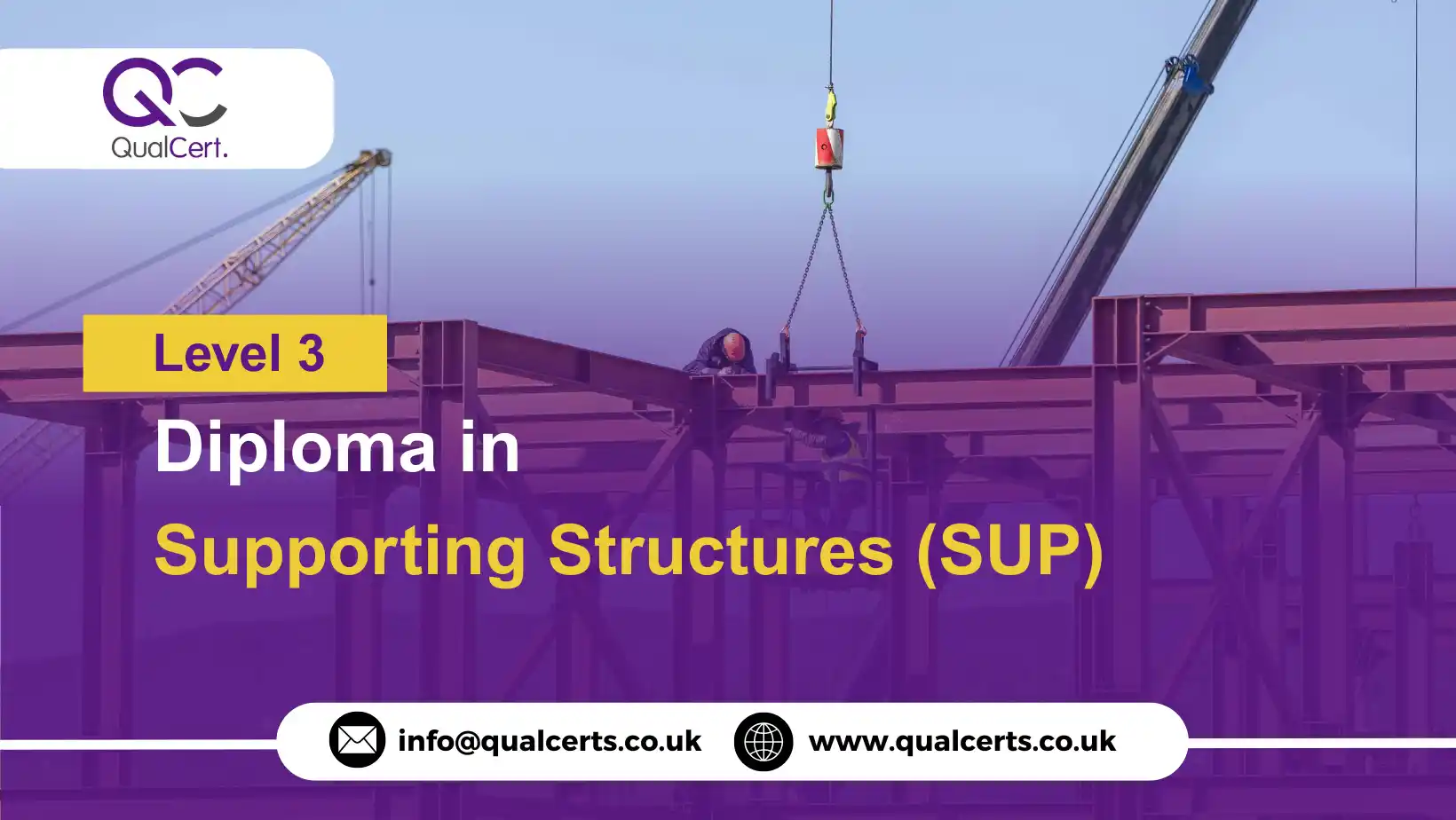
Advance Your Career: Level 3 Supporting Structures Diploma
The QualCert Level 3 Diploma in Supporting Structures (SUP) is a specialised vocational qualification designed to equip learners with the knowledge and practical skills required to work safely and effectively with structural support systems across various industries. This includes temporary and permanent supporting structures such as scaffolding, shoring, bracing, falsework, and other load-bearing frameworks.
Ideal for individuals working in construction, civil engineering, infrastructure development, and industrial maintenance, this diploma provides in-depth understanding of structural stability, load distribution, material selection, and safety compliance. Learners will also gain expertise in identifying structural hazards, interpreting technical drawings, and assisting in the erection, inspection, and dismantling of supporting structures.
The course aligns with international safety standards and regulations, such as OSHA, BS, and EN codes, making it highly relevant for both local and global job markets. By combining theory with real-world application, the qualification ensures learners are ready to contribute to safe and stable work environments.
Whether you are a site technician, scaffold assistant, construction operative, or aspiring supervisor, the Level 3 Diploma in Supporting Structures strengthens your career prospects and helps organisations maintain structural integrity and regulatory compliance.
Program Framework
The QualCert Level 3 Diploma in Supporting Structures (SUP) offers 60 Credits, requiring a Total Qualification Time (TQT) of 300 hours, including 210 Guided Learning Hours (GLH).
| Unit Ref# | Unit Title | Credit | GLH | TQT |
| QC13054-1 | Introduction to Supporting Structures | 10 | 35 | 50 |
| QC13054-2 | Materials and Components Used in Support Systems | 10 | 35 | 50 |
| QC13054-3 | Erection, Installation, and Dismantling Procedures | 10 | 35 | 50 |
| QC13054-4 | Inspection and Maintenance of Supporting Structures | 10 | 35 | 50 |
| QC13054-5 | Legal and Regulatory Compliance | 10 | 35 | 50 |
| QC13054-6 | Safety, Risk Assessment, and Emergency Response | 10 | 35 | 50 |
Eligibility Criteria
To enroll in the QualCert Level 3 Diploma in Supporting Structures (SUP), candidates must meet essential eligibility criteria to ensure effective learning and practical competence. These requirements support both newcomers and professionals.
- Minimum Age: Candidates must be at least 18 years old at the time of registration.
- Educational Background: A basic secondary school education or equivalent qualification is recommended.
- Experience: Prior experience in construction, structural support, or related fields is beneficial but not mandatory.
- Technical Understanding: Basic knowledge of safety procedures, construction materials, and load-bearing principles is an advantage.
- Language Proficiency: Candidates should have a good command of English (reading, writing, and understanding) to follow course materials effectively.
Proficiency Targets
1. Introduction to Supporting Structures
Learning Outcomes:
- Identify and describe different types of supporting structures used in construction and engineering.
- Understand the basic principles of structural stability and load-bearing systems.
- Explain the functions and purposes of scaffolding, shoring, falsework, and bracing.
- Use correct terminology related to structural support systems.
- Recognize where and how supporting structures are applied in various industries.
2. Materials and Components Used in Support Systems
Learning Outcomes:
- Identify the materials commonly used in structural support systems (e.g., steel, aluminium, timber).
- Understand the mechanical properties and load capacities of different materials.
- Select appropriate materials and components based on design and safety requirements.
- Handle, store, and maintain support system materials correctly.
- Recognize the role of fittings, joints, and connectors in maintaining structural integrity.
3. Erection, Installation, and Dismantling Procedures
Learning Outcomes:
- Follow step-by-step procedures for safely erecting and dismantling supporting structures.
- Use tools and equipment effectively during installation and removal processes.
- Demonstrate teamwork and clear communication during structural operations.
- Apply safety protocols to prevent collapse or structural failure during work.
- Identify and mitigate potential hazards during setup and dismantling tasks.
4. Inspection and Maintenance of Supporting Structures
Learning Outcomes:
- Conduct routine and periodic inspections on supporting structures.
- Identify common signs of wear, corrosion, damage, or structural weakness.
- Maintain inspection checklists and complete accurate documentation.
- Carry out basic maintenance activities to ensure structural safety.
- Understand the responsibilities of a competent person in inspection processes.
5. Legal and Regulatory Compliance
Learning Outcomes:
- Understand key legislation and standards governing supporting structures (e.g., OSHA, BS EN, ISO).
- Identify the roles and responsibilities of workers, supervisors, and competent persons.
- Ensure compliance with certification, inspection, and documentation requirements.
- Recognize the legal implications of non-compliance in structural support systems.
- Maintain records to support regulatory audits and workplace safety practices.
6. Safety, Risk Assessment, and Emergency Response
Learning Outcomes:
- Identify risks and hazards associated with supporting structure operations.
- Conduct effective risk assessments and apply appropriate control measures.
- Implement safe systems of work for fall prevention, access, and egress.
- Respond appropriately to structural emergencies, collapses, or incidents.
- Develop and follow site-specific emergency response procedures.
Ideal Participants
The QualCert Level 3 Diploma in Supporting Structures (SUP) is designed for individuals who are involved in the planning, installation, inspection, and maintenance of structural support systems in various industrial and construction environments. This course is ideal for:
- Construction Workers and Site Operatives involved in erecting or dismantling scaffolding, shoring, or bracing systems.
- Civil Engineering Technicians and Infrastructure Workers responsible for supporting formwork, temporary structures, or excavation supports.
- Scaffolders and Scaffold Assistants looking to enhance their technical knowledge and safety practices.
- Maintenance and Repair Crews who deal with the reinforcement and stability of existing structures.
- Health and Safety Officers overseeing the structural integrity and safety of temporary or permanent supports.
- Team Leaders and Supervisors managing worksite operations that involve structural frameworks.
- New entrants to the construction and engineering fields who aim to develop a solid foundation in structural safety and support systems.
This qualification is especially beneficial for professionals working in construction, building maintenance, civil engineering, infrastructure projects, and industrial plant operations, where structural stability and compliance with safety regulations are critical. It also supports career advancement and promotes a safety-first culture in high-risk environments.
Assessment and Verification
Assessment Framework :
This qualification consists of 6 mandatory assignments designed to assess the learner’s understanding and practical application of the required skills and knowledge. The key elements of the assessment framework include:
- Comprehensive Assignment Structure:
The assignments are designed to cover a range of topics within the qualification, ensuring that learners demonstrate their competence across all essential areas. - Pass Requirement:
Learners must successfully complete all 6 assignments to meet the requirements for certification. Each assignment must meet the specified criteria and demonstrate sufficient understanding and application of the subject matter. - Assessment Process:
Each assignment is reviewed and marked by a qualified assessor, with feedback provided to support learner development. - Final Completion Criteria:
The successful completion of all assignments is necessary for certification. Only learners who meet the required standards across all assignments will be awarded the qualification.
Quality Assurance & Verification:
QualCert applies a rigorous, multi-layered quality assurance system to ensure the reliability, consistency, and integrity of all assessments and results.
1. Internal Quality Assurance (IQA)
Conducted by the approved training centre:
- Assignment Evaluation:
Centre-approved Assessors and Internal Quality Assurers (IQAs) review the assignments to ensure they meet the assessment criteria and learning outcomes. - Standardisation:
Regular standardisation sessions are held to maintain consistency in assessment and marking practices across all centre staff. - Feedback & Support:
IQAs ensure that learners receive constructive feedback to aid their progress and improve future submissions.
2. External Quality Assurance (EQA)
Conducted by QualCert:
- Independent Verification:
QualCert’s External Quality Assurers (EQAs) verify the completed assignments and assess the quality and fairness of the marking process. - Centre Audits:
EQAs audit the centre’s compliance with QualCert’s quality assurance standards, reviewing assessment practices, learner records, and overall delivery. - Final Certification:
After satisfying the EQA’s verification process, QualCert will officially issue the certification to the learner.
QualCert delivers all qualifications exclusively through its network of officially approved training centres.
For registration or further information, please contact