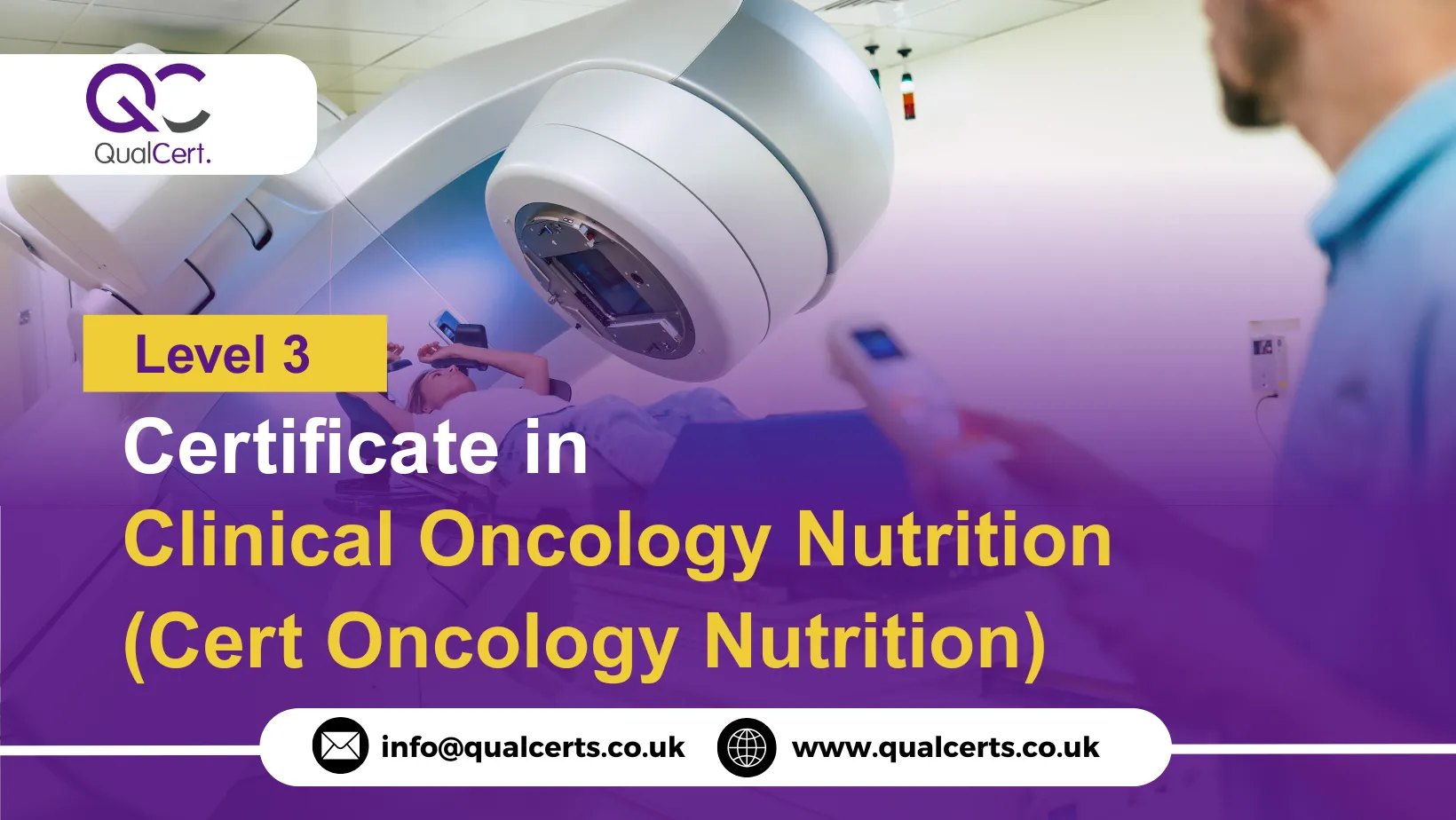
The QualCert Level 3 Certificate in Clinical Oncology Nutrition (Cert Oncology Nutrition) is a specialised qualification designed to equip learners with essential knowledge and practical skills in nutrition for individuals affected by cancer. This programme is suitable for both fresh learners and those with prior experience, making it ideal for professionals who wish to enhance their career prospects, expand their expertise, and strengthen their Continuing Professional Development (CPD).
Learners undertaking this qualification will gain a comprehensive understanding of the nutritional challenges faced by oncology patients, including the impact of cancer treatments, disease progression, and comorbidities on dietary needs. The course covers key areas such as the principles of oncology nutrition, nutritional assessment, personalised dietary planning, management of treatment-related side effects, and strategies to support patient recovery and quality of life. Through a combination of theoretical knowledge and practical application, learners will develop the skills needed to assess nutritional status, implement evidence-based interventions, and provide tailored dietary guidance to oncology patients.
Centres delivering the Cert Oncology Nutrition must ensure they have competent and qualified staff, along with access to up-to-date learning materials, resources, and facilities. This guarantees learners receive high-quality, structured training that promotes engagement, understanding, and successful outcomes.
This qualification is ideal for dietitians, nutritionists, healthcare professionals, oncology nurses, and wellness practitioners working with cancer patients or planning to specialise in clinical oncology nutrition. By completing this programme, learners will gain the confidence, knowledge, and practical skills to make informed dietary recommendations, improve patient outcomes, and contribute effectively to professional practice in oncology nutrition care.
Course Contents of QualCert Level 3 Certificate in Clinical Oncology Nutrition (Cert Oncology Nutrition):
The QualCert Level 3 Certificate in Clinical Oncology Nutrition (Cert Oncology Nutrition), offers 20 Credits, requiring a Total Qualification Time (TQT) of 100 hours, including 70 Guided Learning Hours (GLH).
| Unit Ref# | Unit Title | Credit | GLH | TQT |
| QC29013-1 | Principles of Clinical Oncology Nutrition | 4 | 14 | 20 |
| QC29013-2 | Cancer Pathophysiology and Nutritional Implications | 4 | 14 | 20 |
| QC29013-3 | Nutritional Assessment and Monitoring in Oncology Patients | 4 | 14 | 20 |
| QC29013-4 | Nutrition Intervention and Management for Cancer Patients | 4 | 14 | 20 |
| QC29013-5 | Professional Practice and Ethical Considerations in Oncology Nutrition | 4 | 14 | 20 |
Entry Requirements for the QualCert Level 3 Certificate in Clinical Oncology Nutrition (Cert Oncology Nutrition):
Minimum Age
- Learners must be at least 16 years old to enrol on this programme
Educational Background
- Learners should ideally have a basic understanding of health, biology, nutrition, or science-related subjects. Those with GCSEs, A-levels, or equivalent qualifications in relevant areas are encouraged to apply.
Experience
- This course is suitable for both fresh learners and those with prior experience in nutrition, healthcare, oncology care, or related fields. Experience in clinical settings or patient care is beneficial but not mandatory.
Language Proficiency
- Learners must have a good command of English in reading, writing, and verbal communication to fully engage with course materials, participate in discussions, and complete assessments successfully.
Commitment to Continuing Professional Development (CPD):
- Learners should demonstrate a willingness to actively engage in learning and professional development, as this qualification supports career advancement and skill enhancement.
Access to Required Resources:
- Learners must have access to course materials, digital platforms, and any practical resources provided by the centre. Centres are responsible for ensuring all necessary tools and resources are available to support learner success.
Learning Outcomes for the QualCert Level 3 Certificate in Clinical Oncology Nutrition (Cert Oncology Nutrition):
Unit 1: Principles of Clinical Oncology Nutrition
Learners will be able to:
- Understand the foundational principles of nutrition for oncology patients
- Explain the role of macro- and micronutrients in supporting cancer care
- Describe the importance of energy balance and hydration in oncology nutrition
- Apply nutritional knowledge to support overall patient wellbeing
Unit 2: Cancer Pathophysiology and Nutritional Implications
Learners will be able to:
- Understand the effects of cancer types and progression on nutritional needs
- Analyse the impact of treatments such as chemotherapy, radiotherapy, and surgery on nutrition
- Identify common metabolic and appetite changes in oncology patients
- Apply this knowledge to anticipate nutritional challenges and needs
Unit 3: Nutritional Assessment and Monitoring in Oncology Patients
Learners will be able to:
- Conduct nutritional assessments using evidence-based tools and methods
- Evaluate dietary intake, weight changes, and biochemical markers
- Identify nutritional deficiencies and risks in oncology patients
- Use assessment outcomes to inform and adjust dietary care plans
Unit 4: Nutrition Intervention and Management for Cancer Patients
Learners will be able to:
- Develop personalised nutrition plans tailored to individual patient needs
- Implement dietary strategies to manage treatment-related side effects
- Support recovery, immune function, and quality of life through nutrition
- Monitor and adapt interventions based on patient response and progress
Unit 5: Professional Practice and Ethical Considerations in Oncology Nutrition
Learners will be able to:
- Demonstrate professional and ethical practice in oncology nutrition care
- Communicate effectively with patients, families, and multidisciplinary teams
- Apply national and international guidelines to clinical practice
- Promote evidence-based practice and maintain patient-centred care standards
The QualCert Level 3 Certificate in Clinical Oncology Nutrition is designed for learners who want to develop specialised knowledge and practical skills in supporting the nutritional needs of individuals affected by cancer. This course is suitable for both fresh learners and experienced professionals, providing expertise that enhances career prospects and supports Continuing Professional Development (CPD).
This course is suitable for:
- Dietitians and Nutritionists
Professionals who wish to specialise in oncology nutrition and apply evidence-based dietary strategies to improve patient outcomes. - Healthcare Practitioners
Oncology nurses, healthcare assistants, and other practitioners working with cancer patients seeking to enhance nutritional care and support recovery. - Wellness and Lifestyle Practitioners
Personal trainers, wellness coaches, and lifestyle advisors aiming to incorporate oncology nutrition into holistic patient care. - Clinical and Community Health Workers
Individuals involved in hospital, community, or home-based cancer care programmes who want to promote better nutritional management. - Students Planning Further Study
Learners preparing to advance to higher-level qualifications in nutrition, dietetics, oncology care, or healthcare management. - Professionals Committed to CPD
Learners looking to strengthen their professional profile, gain practical skills, and enhance career opportunities in oncology nutrition and patient support services.
This course equips learners with the knowledge, confidence, and practical skills to provide informed dietary guidance, improve patient outcomes, and contribute effectively to professional practice in oncology nutrition.
Centre Requirements are the ;
To ensure high-quality delivery and successful learner outcomes, centres offering this qualification must meet the following requirements:
- Qualified and Competent Staff
Centres must employ trainers and assessors who are fully qualified and experienced in oncology nutrition, dietetics, healthcare, or related fields, with appropriate teaching or training credentials. - Access to Up-to-Date Learning Resources
Centres must provide learners with current textbooks, digital materials, case studies, and other teaching aids relevant to oncology nutrition. - Safe and Accessible Learning Environment
Training facilities should be safe, well-equipped, and accessible to all learners, including those with additional learning needs. - Assessment and Verification Procedures
Centres must have robust systems for conducting assessments, monitoring learner progress, and ensuring accurate verification of learner achievements. - Technology and Digital Access
Centres should provide learners with access to computers, online learning platforms, and reliable internet connectivity for blended or remote learning activities. - Support for Continuing Professional Development (CPD)
Centres should encourage and support ongoing professional development for trainers to ensure they remain updated with the latest practices in oncology nutrition and education delivery. - Compliance with Policies and Regulations
Centres must operate in line with health, safety, and educational regulations, maintaining a professional and legally compliant learning environment. - Monitoring and Quality Assurance
Centres should implement systems to monitor and evaluate the quality of training, learner satisfaction, and outcomes, making improvements where necessary.