Professional BLS Training: Level 3 Life Support Diploma
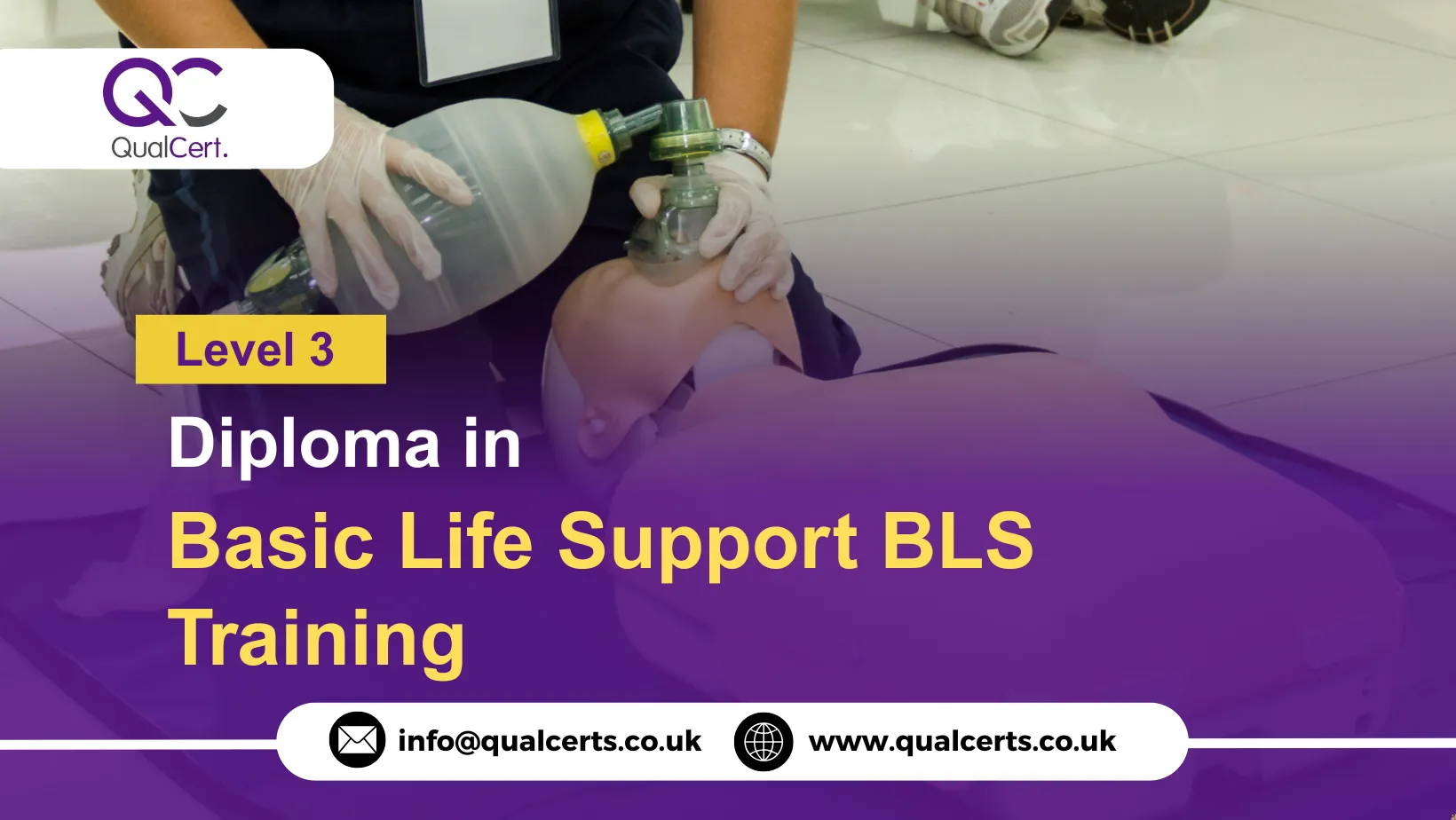
The QualCert Level 3 Diploma in Basic Life Support (BLS) Training is an advanced qualification designed for learners who want to master life-saving skills and respond confidently in emergency situations. This diploma builds on foundational BLS knowledge and equips participants with practical expertise in CPR, AED usage, choking response, and first aid for adults, children, and infants.
Learners gain hands-on experience through real-world simulations and scenario-based training, developing the ability to manage medical emergencies effectively. The course also covers trauma care, bleeding control, fractures, spinal injuries, and shock management, as well as scene assessment, risk management, and coordination with emergency services.
Upon completion, participants receive a recognised Level 3 BLS Diploma, enhancing their career prospects in healthcare, emergency response, first aid, and workplace safety. This program is ideal for healthcare professionals, first responders, teachers, security personnel, and anyone seeking advanced life-saving skills.
Program Framework
The QualCert Level 3 Diploma in Basic Life Support BLS Training offers 60 Credits, requiring a Total Qualification Time (TQT) of 300 hours, including 210 Guided Learning Hours (GLH). The highest-level diploma that focuses on leadership, coordination, and advanced life support techniques.
| Unit Ref# | Unit Title | Credit | GLH | TQT |
| QC14009-1 | Advanced Theoretical and Practical Life Support Techniques | 10 | 35 | 50 |
| QC14009-2 | Leadership and Coordination in Emergency Medical Response | 10 | 35 | 50 |
| QC14009-3 | Advanced Trauma Life Support and Mass Casualty Management | 10 | 35 | 50 |
| QC14009-4 | Use of Medical Equipment and Pharmacological Interventions | 10 | 35 | 50 |
| QC14009-5 | Research, Risk Analysis, and Innovations in BLS | 10 | 35 | 50 |
| QC14009-6 | Practical Simulations and High-Stress Scenario Training | 10 | 35 | 50 |
Eligibility Criteria
To enroll in the QualCert Level 3 Diploma in Basic Life Support (BLS) Training, Candidates must meet the following requirements:
- Age Requirement: Candidates must be at least 16 years old to participate in the training.
- Language Proficiency: Basic English skills are required to understand course materials, follow instructions, and complete assessments.
- Prior Qualification: While not mandatory, it is recommended that learners have completed the QualCert Level 2 Diploma in Basic Life Support or an equivalent qualification.
- Physical Fitness: Candidates should be physically capable of performing CPR, using an AED, and handling first aid procedures, as the course involves hands-on training.
- Commitment to Practical Learning: The course includes emergency simulations and scenario-based assessments, requiring active participation.
- No Medical Background Required: The course is open to individuals from all backgrounds, including healthcare professionals, workplace first aiders, and emergency responders.
These entry requirements ensure that participants can fully engage in the course and develop essential life-saving skills needed for real-world emergency situations.
Proficiency Targets
Advanced Theoretical and Practical Life Support Techniques
- Develop expertise in advanced CPR, AED usage, and airway management techniques.
- Understand the physiological principles behind life support interventions.
- Apply evidence-based practices to enhance patient survival rates in emergencies.
Leadership and Coordination in Emergency Medical Response
- Lead and manage emergency response teams in high-pressure situations.
- Communicate effectively with first responders, medical teams, and bystanders.
- Implement structured emergency action plans for efficient incident management.
Advanced Trauma Life Support and Mass Casualty Management
- Assess and prioritise multiple casualties using triage techniques.
- Manage severe trauma cases, including head injuries, fractures, and spinal damage.
- Implement mass casualty response strategies for disaster and accident scenarios.
Use of Medical Equipment and Pharmacological Interventions
- Operate essential medical equipment such as bag-valve masks, suction devices, and oxygen therapy units.
- Understand the role of pharmacological interventions in BLS and emergency medicine.
- Safely administer life-saving medications under professional guidance.
Research, Risk Analysis, and Innovations in BLS
- Analyse case studies and emerging trends in basic life support techniques.
- Conduct risk assessments to improve emergency preparedness and response.
- Explore innovative technologies and methodologies in life-saving interventions.
Practical Simulations and High-Stress Scenario Training
- Participate in realistic emergency simulations to enhance decision-making skills.
- Perform life-saving procedures under time-sensitive and high-pressure conditions.
- Evaluate performance through debriefing and continuous improvement strategies.
Ideal Participants
The QualCert Level 3 Diploma in Basic Life Support (BLS) Training is designed for individuals seeking advanced life-saving skills and a recognised qualification in emergency response. This course is ideal for:
- Healthcare Professionals – Doctors, nurses, paramedics, and medical staff requiring advanced BLS training.
- Emergency Responders – Firefighters, police officers, and ambulance personnel who need to manage critical situations.
- Workplace First Aiders – Employees responsible for providing first aid in offices, factories, and industrial settings.
- Security Personnel – Guards and event safety staff needing advanced life support skills.
- Construction and Industrial Workers – Employees working in high-risk environments where accidents are common.
- Transport and Hospitality Staff – Airline crew, hotel employees, and transport workers needing first aid skills.
- Aspiring Medical Professionals – Students looking to build a strong foundation for careers in healthcare and emergency services.
This course is perfect for anyone looking to gain in-depth emergency response skills, whether for professional development or personal preparedness.
Assessment and Verification
Assessment Framework :
This qualification consists of 6 mandatory assignments designed to assess the learner’s understanding and practical application of the required skills and knowledge. The key elements of the assessment framework include:
- Comprehensive Assignment Structure:
The assignments are designed to cover a range of topics within the qualification, ensuring that learners demonstrate their competence across all essential areas. - Pass Requirement:
Learners must successfully complete all 6 assignments to meet the requirements for certification. Each assignment must meet the specified criteria and demonstrate sufficient understanding and application of the subject matter. - Assessment Process:
Each assignment is reviewed and marked by a qualified assessor, with feedback provided to support learner development. - Final Completion Criteria:
The successful completion of all assignments is necessary for certification. Only learners who meet the required standards across all assignments will be awarded the qualification.
Quality Assurance & Verification:
QualCert applies a rigorous, multi-layered quality assurance system to ensure the reliability, consistency, and integrity of all assessments and results.
1. Internal Quality Assurance (IQA)
Conducted by the approved training centre:
- Assignment Evaluation:
Centre-approved Assessors and Internal Quality Assurers (IQAs) review the assignments to ensure they meet the assessment criteria and learning outcomes. - Standardisation:
Regular standardisation sessions are held to maintain consistency in assessment and marking practices across all centre staff. - Feedback & Support:
IQAs ensure that learners receive constructive feedback to aid their progress and improve future submissions.
2. External Quality Assurance (EQA)
Conducted by QualCert:
- Independent Verification:
QualCert’s External Quality Assurers (EQAs) verify the completed assignments and assess the quality and fairness of the marking process. - Centre Audits:
EQAs audit the centre’s compliance with QualCert’s quality assurance standards, reviewing assessment practices, learner records, and overall delivery. - Final Certification:
After satisfying the EQA’s verification process, QualCert will officially issue the certification to the learner.
QualCert delivers all qualifications exclusively through its network of officially approved training centres.
For registration or further information, please contact.