Professional BLS Training: Level 3 Life Support Certificate
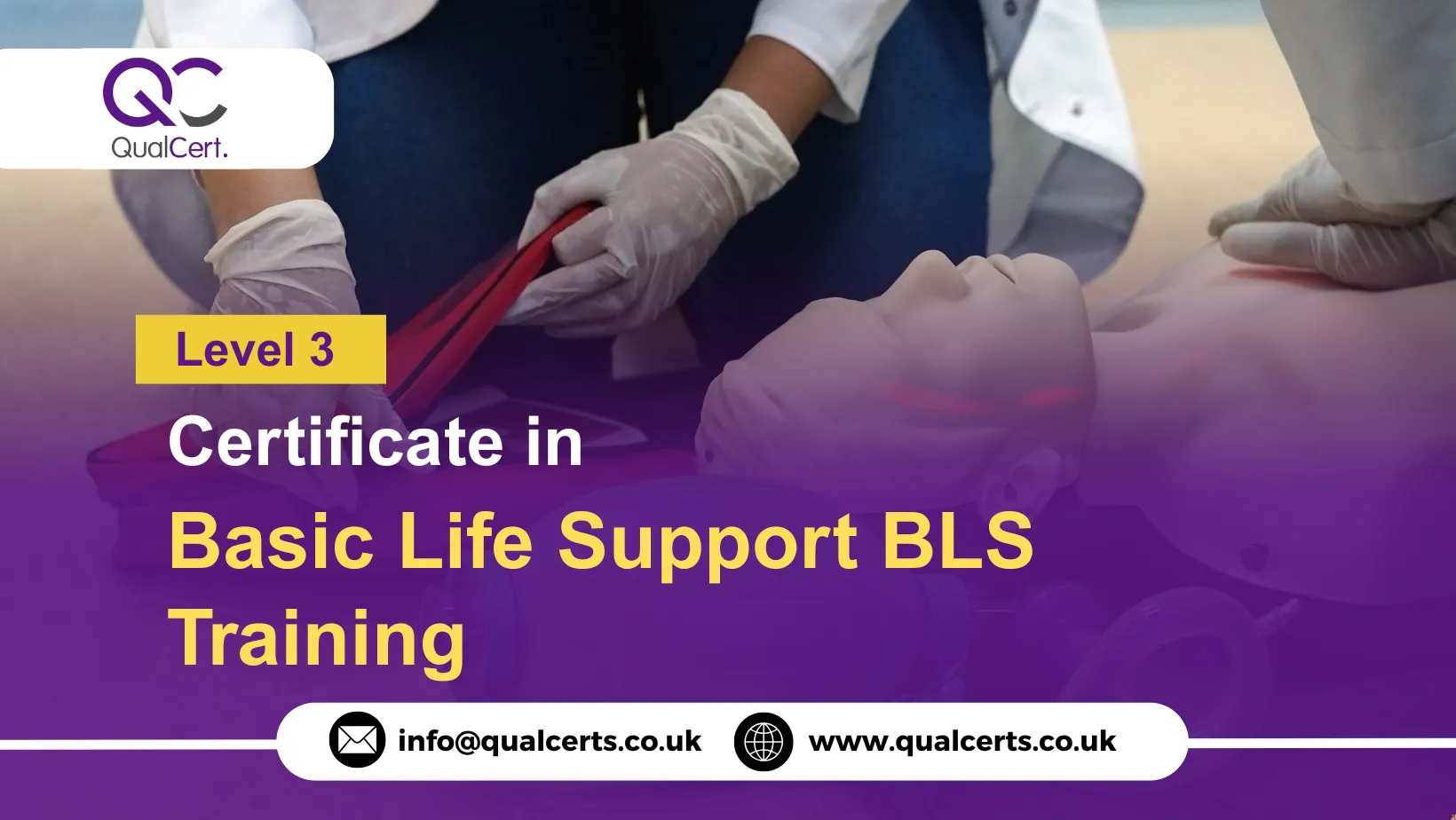
The QualCert Level 3 Certificate in Basic Life Support BLS Training is an advanced course designed to equip individuals with the knowledge and skills necessary to handle critical medical emergencies. The QualCert Level 3 Certificate in Basic Life Support BLS Training provides in-depth training in life-saving techniques, emergency response, and first aid procedures. Participants will gain expertise in performing high-quality CPR, using an automated external defibrillator (AED), managing airway obstructions, and responding to severe medical conditions such as cardiac arrest, stroke, and anaphylaxis.
The training also covers trauma management, spinal injury care, emergency scene assessment, and legal responsibilities in emergency response. The QualCert Level 3 Certificate in Basic Life Support BLS Training is ideal for healthcare professionals, emergency responders, workplace first aiders, security personnel, sports coaches, and individuals in high-risk environments. It is particularly beneficial for those who require a more comprehensive understanding of Basic Life Support beyond the fundamental levels.
The QualCert Level 3 Certificate in Basic Life Support BLS Training is delivered through instructor-led classroom sessions, blended learning options, and on-site workplace training. The training duration is approximately two to three days, depending on prior experience and learning format. Having advanced Basic Life Support skills can significantly improve survival rates in medical emergencies. The QualCert Level 3 Certificate in Basic Life Support BLS Training ensures that participants are fully prepared to take immediate and effective action when needed.
Program Framework
The QualCert Level 3 Certificate in Basic Life Support BLS Training offers 20 Credits, requiring a Total Qualification Time (TQT) of 100 hours, including 70 Guided Learning Hours (GLH). A professional-level certification that prepares individuals for high-risk emergency response situations.
| Unit Ref# | Unit Title | Credit | GLH | TQT |
| QC14006-1 | Advanced Techniques in CPR and AED Use | 4 | 14 | 20 |
| QC14006-2 | Recognition and Management of Cardiac Arrest and Respiratory Failure | 4 | 14 | 20 |
| QC14006-3 | Treating Life-Threatening Injuries in Pre-Hospital Care | 4 | 14 | 20 |
| QC14006-4 | Psychological First Aid and Supporting Casualties in Emergencies | 4 | 14 | 20 |
| QC14006-5 | Legal, Ethical, and Professional Responsibilities in Life Support | 4 | 14 | 20 |
Eligibility Criteria
The QualCert Level 3 Certificate in Basic Life Support (BLS) Training is designed for learners who want to master advanced life-saving skills and gain confidence in emergency medical situations.
- Minimum Age: Candidates must be at least 18 years old.
- Educational Background: No formal qualifications are required. A basic understanding of English is sufficient to follow instructions and course materials.
- Work Experience: No prior work experience is necessary. This course is suitable for healthcare aspirants, volunteers, and professionals looking to enhance their emergency response skills.
- Language Proficiency: Candidates should have proficient English communication skills, both written and spoken, to fully understand instructions, follow practical demonstrations, and complete assessments effectively.
These entry requirements ensure participants are prepared to develop advanced BLS skills, respond confidently in emergencies, and gain critical life-saving expertise.
Proficiency Targets
Advanced Techniques in CPR and AED Use
- Perform high-quality CPR using advanced techniques for adults, children, and infants.
- Effectively operate an automated external defibrillator (AED) in different emergency scenarios.
- Understand modifications in CPR for special situations, including drowning and trauma cases.
Recognition and Management of Cardiac Arrest and Respiratory Failure
- Identify early warning signs of cardiac arrest and respiratory failure.
- Apply appropriate interventions to restore breathing and circulation.
- Understand the use of oxygen therapy and airway management techniques.
Treating Life-Threatening Injuries in Pre-Hospital Care
- Manage severe bleeding, fractures, and spinal injuries in emergency settings.
- Apply effective trauma care techniques to stabilise casualties before medical assistance arrives.
- Understand the principles of shock management and its prevention.
Psychological First Aid and Supporting Casualties in Emergencies
- Recognise and manage emotional and psychological distress in casualties and bystanders.
- Apply psychological first aid techniques to provide comfort and reassurance.
- Understand the impact of trauma and stress on emergency responders.
Legal, Ethical, and Professional Responsibilities in Life Support
- Understand legal obligations and ethical considerations in emergency care.
- Follow professional standards and best practices in life support and first aid.
- Maintain accurate records and comply with incident reporting requirements.
Ideal Participants
The QualCert Level 3 Certificate in Basic Life Support (BLS) Training is designed for individuals who need advanced life-saving skills and the confidence to respond effectively in critical emergencies. This course is ideal for those who want to go beyond basic first aid and develop a deeper understanding of emergency response techniques.
- Healthcare professionals – Nurses, paramedics, and caregivers needing advanced BLS certification.
- Emergency responders – Firefighters, police officers, and security personnel handling medical emergencies.
- Workplace first aiders – Employees responsible for emergency care in offices, factories, and high-risk industries.
- Sports coaches & fitness trainers – Managing sudden cardiac arrests, trauma, and medical emergencies.
- Teachers & childcare providers – Ensuring child safety and responding to medical incidents in schools.
- Construction & industrial workers – Handling accidents, injuries, and workplace medical crises.
- Community volunteers & responsible citizens – Gaining life-saving skills for home, work, and public settings.
Assessment and Verification
Assessment Framework :
The qualification is assessed through a structured Multiple-Choice Question (MCQ)–based examination, designed to measure both theoretical understanding and practical application of knowledge. Key features of the assessment framework include:
- Evidence-Based Assessment:
MCQs are developed using industry-aligned standards to ensure the assessment reflects real-world competencies and current professional practices. - Structured Examination Format:
The exam consists of scenario-based and knowledge-based MCQs, requiring learners to demonstrate critical thinking and subject mastery. - Performance Threshold:
Learners must obtain a minimum score of 70% to successfully complete the qualification. This benchmark ensures that every certified learner meets QualCert’s required level of competence. - Assessment Integrity:
All assessments are conducted under controlled, secure conditions at approved training centres to maintain fairness, consistency, and integrity.
Quality Assurance & Verification :
QualCert applies a comprehensive, multi-layered quality assurance system to uphold international standards and ensure the reliability of all assessment outcomes.
1. Internal Quality Assurance (IQA)
Conducted by the approved training centre:
- Assessment Review:
Centre-approved Assessors and Internal Quality Assurers (IQAs) review learner evidence, scoring accuracy, and compliance with assessment criteria. - Standardisation Activities:
Regular standardisation meetings are conducted within centres to ensure consistent marking practices across all assessors. - Continuous Improvement:
IQAs provide feedback to Assessors to enhance assessment delivery, marking reliability, and learner support.
2. External Quality Assurance (EQA)
Conducted by QualCert:
- Independent Verification:
QualCert External Quality Assurers review a sample of learner assessments to confirm accuracy, consistency, and compliance with QualCert and regulatory standards. - Centre Compliance Audits:
EQAs examine centre procedures, assessor qualifications, assessment environments, and record-keeping to ensure full adherence to quality assurance policies. - Quality and Standards Validation:
EQAs verify that assessment decisions are fair, valid, reliable, and aligned with national and international benchmarks. - Final Approval:
Once the EQA is satisfied that all quality standards have been met, the centre’s results are approved, and QualCert officially releases the certification to the learner.
QualCert delivers all qualifications exclusively through its global network of officially approved training centres.
For registration, guidance, or programme details, please contact your nearest approved training centre.