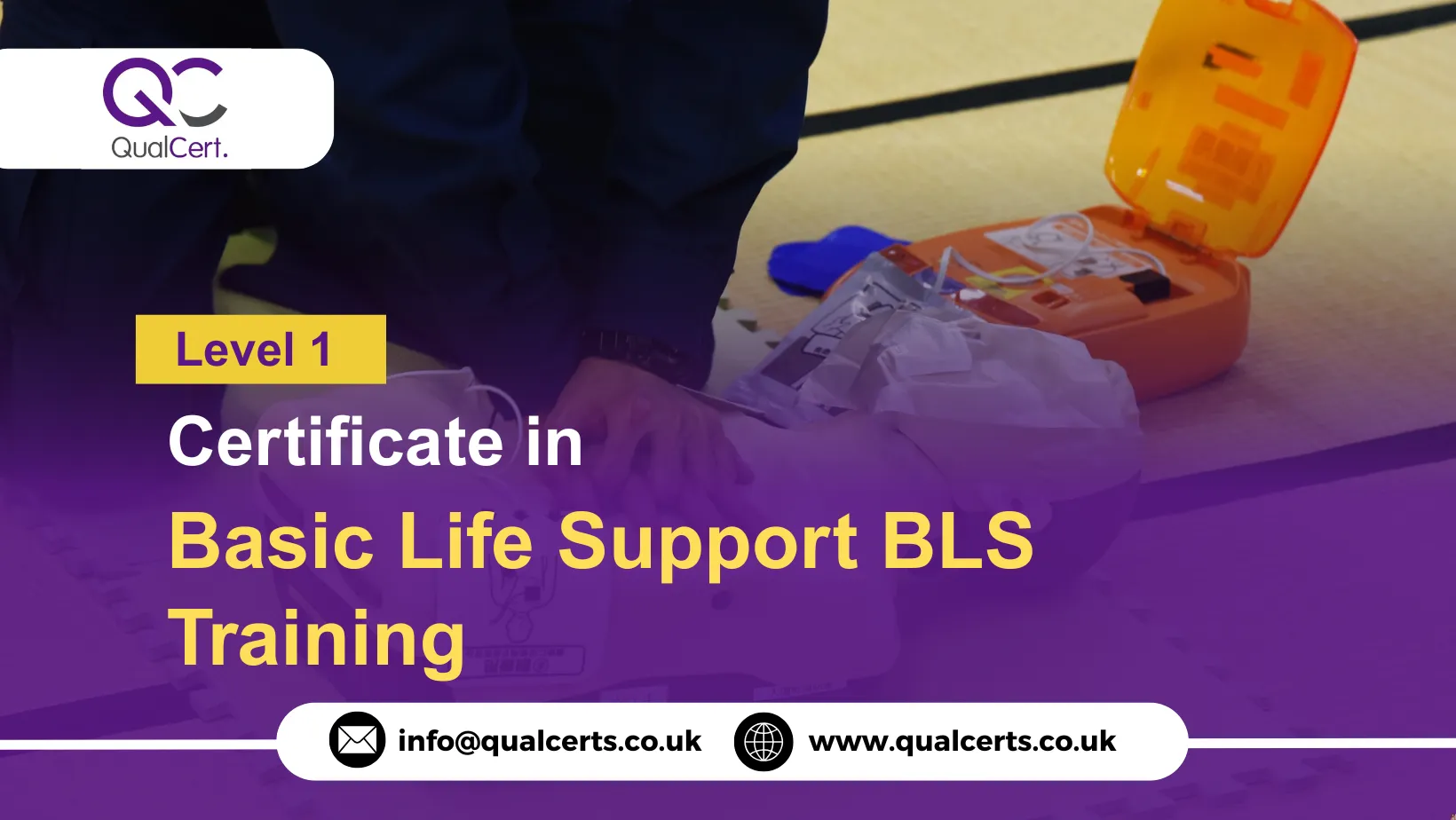
Boost Confidence: Level 1 Basic Life Support Award
QualCert Level 1 Certificate in Basic Life Support BLS Training is a critical skill set that enables individuals to provide immediate and effective assistance in life-threatening situations. The QualCert Level 1 Certificate in Basic Life Support BLS Training is designed to equip learners with fundamental knowledge and practical skills in emergency response. This qualification is ideal for individuals across various sectors, including healthcare, construction, corporate workplaces, and public environments, where emergency situations may arise.
The QualCert Level 1 Certificate in Basic Life Support BLS Training provides a structured learning experience focused on emergency response techniques such as cardiopulmonary resuscitation (CPR), airway management, and dealing with unconscious casualties. The QualCert Level 1 Certificate in Basic Life Support BLS Training adheres to UK Resuscitation Council Guidelines, ensuring compliance with internationally recognised best practices.
The QualCert Level 1 Certificate in Basic Life Support BLS Training is an essential qualification for anyone looking to acquire life-saving skills. By completing this course, learners gain the confidence and competence to respond effectively in emergency situations, contributing to safer workplaces and communities. When selecting a Basic Life Support (BLS) training provider, it is essential to choose an organisation that adheres to the highest training standards and provides industry-recognised qualifications. QualCert stands out as a trusted provider of professional certifications
With QualCert Level 1 Certificate in Basic Life Support BLS Training, you are not just gaining a qualification—you are learning essential skills that can make a difference in critical situations. The high-quality training, affordability, and credibility make it a top choice for individuals and businesses alike. Whether for professional development or personal preparedness, the QualCert Level 1 Certificate in Basic Life Support BLS Training empowers learners with the knowledge and confidence to act swiftly and effectively in emergencies.
Program Framework
The QualCert Level 1 Certificate in Basic Life Support BLS Training offers 10 Credits, requiring a Total Qualification Time (TQT) of 50 hours, including 35 Guided Learning Hours (GLH). This certification includes detailed training on life support, legal considerations, and first aid management.
| Unit Ref# | Unit Title | Credit | GLH | TQT |
| QC14004-1 | Fundamentals of Basic Life Support and Emergency Scene Assessment | 2 | 7 | 10 |
| QC14004-2 | Performing CPR and Using an AED in a Medical Emergency | 2 | 7 | 10 |
| QC14004-3 | Identifying and Managing Common Cardiac Arrest Causes | 2 | 7 | 10 |
| QC14004-4 | Responding to Breathing Difficulties and Anaphylaxis | 2 | 7 | 10 |
| QC14004-5 | Legal Responsibilities and Communication in Emergency Care | 2 | 7 | 10 |
Eligibility Criteria
The QualCert Level 1 Certificate in BLS Training is designed for beginners and professionals seeking essential life-saving skills.
- Minimum Age: Learners must be at least 16 years old.
- Educational Background: No formal qualifications are required. A basic understanding of English is sufficient to follow instructions.
- Work Experience: No prior work experience is required. The course is ideal for school leavers, volunteers, or those entering healthcare or first-aid roles.
- Language Proficiency: Basic English reading and communication skills are required to understand training materials and instructions.
Proficiency Targets
1. Fundamentals of Basic Life Support and Emergency Scene Assessment
Upon completing this unit, learners will be able to:
- Understand the principles of Basic Life Support (BLS) and its importance in emergency response.
- Conduct a primary and secondary assessment of an emergency scene to ensure safety.
- Identify when and how to seek emergency medical assistance.
- Recognise the role and responsibilities of a first responder in life-threatening situations.
2. Performing CPR and Using an AED in a Medical Emergency
Upon completing this unit, learners will be able to:
- Demonstrate the correct CPR technique for adults, children, and infants.
- Identify the purpose and function of an Automated External Defibrillator (AED).
- Recognise and manage post-resuscitation care until emergency services arrive.
3. Identifying and Managing Common Cardiac Arrest Causes
Upon completing this unit, learners will be able to:
- Identify common causes of cardiac arrest, including heart attacks, arrhythmias, and trauma.
- Recognise the warning signs of a heart attack and the need for early intervention.
- Understand the role of oxygenation and circulation in cardiac emergencies.
4. Responding to Breathing Difficulties and Anaphylaxis
Upon completing this unit, learners will be able to:
- Identify signs and symptoms of airway obstructions, choking, and respiratory distress.
- Perform the appropriate choking response techniques for adults, children, and infants.
- Recognise asthma attacks, allergic reactions, and anaphylaxis.
- Monitor and provide supportive care to casualties with breathing difficulties.
5. Legal Responsibilities and Communication in Emergency Care
Upon completing this unit, learners will be able to:
- Understand the legal and ethical considerations in providing emergency care.
- Explain the duty of care and Good Samaritan laws in the UK.
- Communicate effectively with emergency services, bystanders, and the casualty.
Ideal Participants
The QualCert Level 1 Certificate in Basic Life Support (BLS) Training is designed for individuals who want to develop essential life-saving skills and be prepared to respond to medical emergencies. This course is suitable for:
- Healthcare Professionals – Nurses, caregivers, dental staff, and other medical personnel who need BLS certification for their roles.
- Workplace First Aiders – Employees responsible for first aid in offices, factories, warehouses, and other workplace settings.
- Teachers and Childcare Providers – School staff, nursery workers, and childminders who may need to respond to medical emergencies involving children.
- Security and Emergency Responders – Security officers, event staff, and personnel working in public safety roles.
- Construction and Industrial Workers – Employees in high-risk industries where accidents may require immediate first aid response.
- Sports Coaches and Fitness Professionals – Trainers, gym staff, and coaches responsible for the safety of athletes and clients.
- General Public and Community Members – Anyone who wants to learn how to provide immediate assistance in emergencies, whether at home, in public, or in the workplace.
This qualification is ideal for those looking to enhance their emergency response skills, improve workplace safety, or meet health and safety requirements in their profession.
Assessment and Verification
Assessment Framework :
The qualification is assessed through a structured Multiple-Choice Question (MCQ)–based examination, designed to measure both theoretical understanding and practical application of knowledge. Key features of the assessment framework include:
- Evidence-Based Assessment:
MCQs are developed using industry-aligned standards to ensure the assessment reflects real-world competencies and current professional practices. - Structured Examination Format:
The exam consists of scenario-based and knowledge-based MCQs, requiring learners to demonstrate critical thinking and subject mastery. - Performance Threshold:
Learners must obtain a minimum score of 70% to successfully complete the qualification. This benchmark ensures that every certified learner meets QualCert’s required level of competence. - Assessment Integrity:
All assessments are conducted under controlled, secure conditions at approved training centres to maintain fairness, consistency, and integrity.
Quality Assurance & Verification :
QualCert applies a comprehensive, multi-layered quality assurance system to uphold international standards and ensure the reliability of all assessment outcomes.
1. Internal Quality Assurance (IQA)
Conducted by the approved training centre:
- Assessment Review:
Centre-approved Assessors and Internal Quality Assurers (IQAs) review learner evidence, scoring accuracy, and compliance with assessment criteria. - Standardisation Activities:
Regular standardisation meetings are conducted within centres to ensure consistent marking practices across all assessors. - Continuous Improvement:
IQAs provide feedback to Assessors to enhance assessment delivery, marking reliability, and learner support.
2. External Quality Assurance (EQA)
Conducted by QualCert:
- Independent Verification:
QualCert External Quality Assurers review a sample of learner assessments to confirm accuracy, consistency, and compliance with QualCert and regulatory standards. - Centre Compliance Audits:
EQAs examine centre procedures, assessor qualifications, assessment environments, and record-keeping to ensure full adherence to quality assurance policies. - Quality and Standards Validation:
EQAs verify that assessment decisions are fair, valid, reliable, and aligned with national and international benchmarks. - Final Approval:
Once the EQA is satisfied that all quality standards have been met, the centre’s results are approved, and QualCert officially releases the certification to the learner.
QualCert delivers all qualifications exclusively through its global network of officially approved training centres.
For registration, guidance, or programme details, please contact your nearest approved training centre.