Professional BLS Training: Level 1 Life Support Award
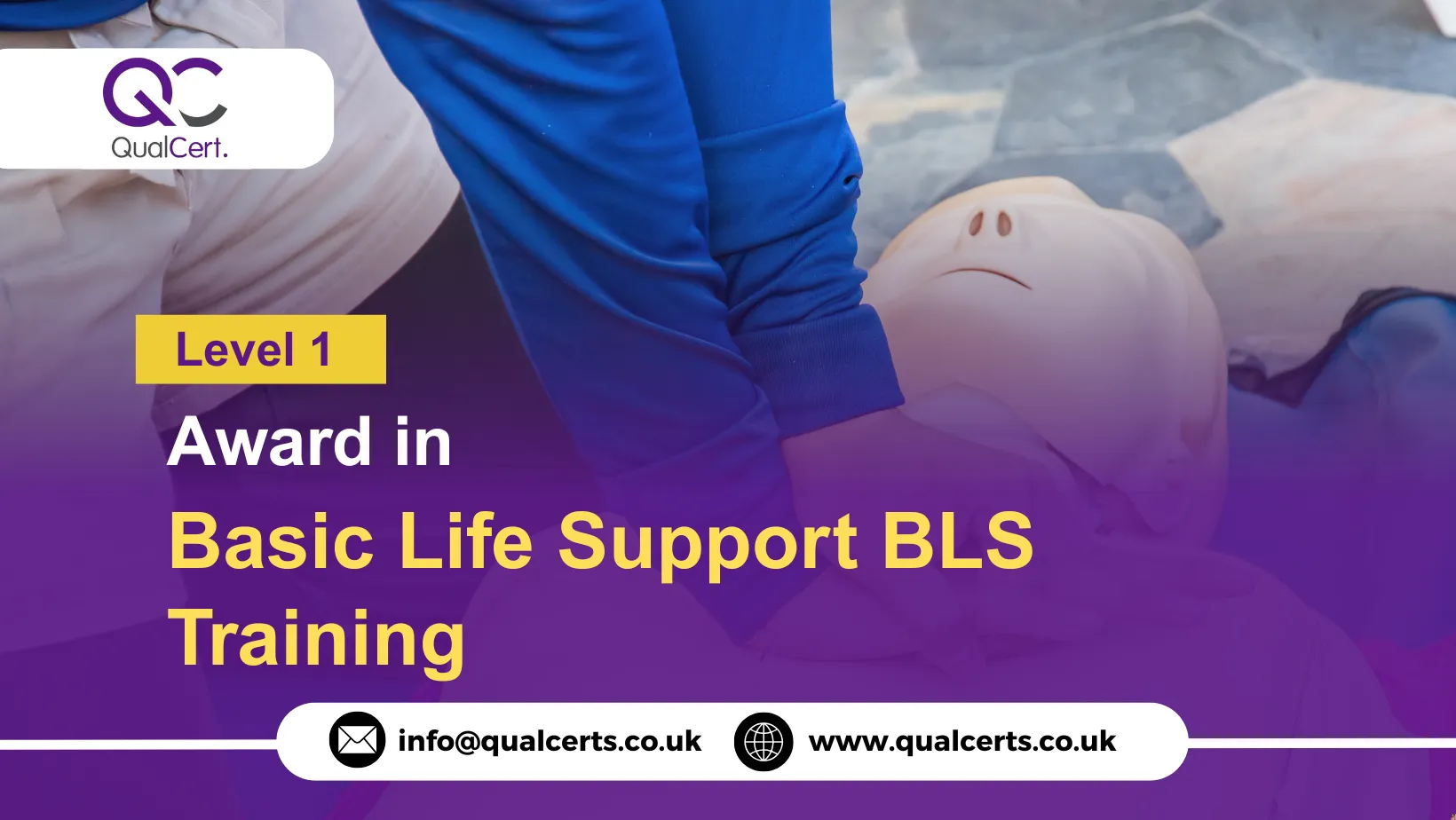
The QualCert Level 1 Award in Basic Life Support BLS Training is a foundational qualification designed to equip individuals with essential life-saving skills. This course covers fundamental techniques required to respond to life-threatening emergencies. Participants will learn how to assess an unconscious casualty, perform Cardiopulmonary Resuscitation (CPR), use an Automated External Defibrillator (AED), and provide basic first aid in critical situations. The training emphasises the importance of a rapid and effective response in cardiac arrest, choking incidents, and respiratory emergencies.
The QualCert Level 1 Award in Basic Life Support BLS Training includes both theoretical and practical components, ensuring that learners gain hands-on experience in performing life-saving interventions. Simulated emergency scenarios help reinforce critical skills, enabling participants to react confidently in real-life situations. The course also highlights the legal responsibilities of first responders and the importance of clear communication when providing emergency assistance.
Upon successful completion of the QualCert Level 1 Award in Basic Life Support BLS Training, candidates will receive a Level 1 Award in Basic Life Support (BLS) certification, demonstrating their competency in performing essential life-saving techniques. This qualification is particularly valuable for healthcare workers, first aiders, caregivers, teachers, fitness instructors, and members of the general public who wish to be prepared for emergency situations.
By completing this QualCert Level 1 Award in Basic Life Support BLS Training, participants will be better equipped to provide immediate assistance in medical emergencies, potentially saving lives before professional medical help arrives. The QualCert Level 1 Award in Basic Life Support BLS Training is an essential qualification for anyone looking to enhance their emergency response skills in compliance with UK health and safety standards.
Program Framework
The QualCert Level 1 Award in Basic Life Support BLS Training offers 3 Credits, requiring a Total Qualification Time (TQT) of 12 hours, including 9 Guided Learning Hours (GLH). This introductory award covers fundamental life-saving techniques required for emergency response.
| Unit Ref# | Unit Title | Credit | GLH | TQT |
| QC14001-1 | Principles of Basic Life Support and Emergency Response | 1 | 3 | 4 |
| QC14001-2 | Cardiopulmonary Resuscitation and Automated External Defibrillator Usage | 1 | 3 | 4 |
| QC14001-3 | Choking and Airway Obstruction Management | 1 | 3 | 4 |
Eligibility Criteria
The entry requirements for the QualCert Level 1 Award in Basic Life Support (BLS) Training are set to ensure accessibility while maintaining the necessary competency for life-saving interventions.
- Minimum Age: Learners must be at least 16 years old to enroll.
- Educational Background: No formal qualifications are required. A basic understanding of English is sufficient to follow course instructions.
- Work Experience: No prior work experience is required. This award is suitable for beginners, school leavers, or healthcare aspirants who want to gain essential BLS skills.
- Language Proficiency: Basic English reading and communication skills are required to understand training materials and follow instructions safely.
Core Achievements
Principles of Basic Life Support and Emergency Response
- Understand the fundamental principles of Basic Life Support (BLS) and its role in emergency response.
- Identify life-threatening emergencies and apply appropriate first-response techniques.
- Demonstrate knowledge of the chain of survival and the importance of early intervention in cardiac arrest situations.
Cardiopulmonary Resuscitation (CPR) and Automated External Defibrillator (AED) Usage
- Perform high-quality CPR following UK Resuscitation Council guidelines, including correct compression depth and ventilation ratio.
- Safely operate an Automated External Defibrillator (AED) and apply it effectively during a cardiac arrest.
- Understand the differences in CPR techniques for adults, children, and infants, ensuring appropriate life-saving care.
Choking and Airway Obstruction Management
- Identify partial and complete airway obstructions and assess the severity of a choking incident.
- Apply the correct back blows, abdominal thrusts (Heimlich manoeuvre), and chest thrusts for different age groups.
- Recognise when to seek emergency medical assistance if standard choking relief techniques are unsuccessful.
The QualCert Level 1 Award in Basic Life Support (BLS) Training is designed for individuals who require essential life-saving skills in emergency situations. This course is suitable for a wide range of participants, ensuring that they can respond effectively to medical emergencies in both workplace and public settings. This course is ideal for:
- Workplace First Aiders – Employees designated as first aiders in offices, factories, warehouses, and other workplaces to comply with UK Health and Safety Executive (HSE) regulations.
- Healthcare Support Staff – Caregivers, nursing assistants, and medical support workers who need BLS certification for patient care responsibilities.
- Education Professionals – Teachers, school staff, and childcare providers responsible for ensuring child safety and emergency preparedness in schools and nurseries.
- Public Service Personnel – Police officers, firefighters, and security staff who may be required to administer immediate life-saving interventions.
- Community and Voluntary Responders – Individuals working in charitable organisations, sports clubs, and community centres where first aid knowledge is beneficial.
- General Public and Parents – Anyone who wants to learn essential CPR, AED use, and choking response to provide immediate assistance in emergencies at home or in public places.
Assessment and Verification
Assessment Framework :
The qualification is assessed through a structured Multiple-Choice Question (MCQ)–based examination, designed to measure both theoretical understanding and practical application of knowledge. Key features of the assessment framework include:
- Evidence-Based Assessment:
MCQs are developed using industry-aligned standards to ensure the assessment reflects real-world competencies and current professional practices. - Structured Examination Format:
The exam consists of scenario-based and knowledge-based MCQs, requiring learners to demonstrate critical thinking and subject mastery. - Performance Threshold:
Learners must obtain a minimum score of 70% to successfully complete the qualification. This benchmark ensures that every certified learner meets QualCert’s required level of competence. - Assessment Integrity:
All assessments are conducted under controlled, secure conditions at approved training centres to maintain fairness, consistency, and integrity.
Quality Assurance & Verification :
QualCert applies a comprehensive, multi-layered quality assurance system to uphold international standards and ensure the reliability of all assessment outcomes.
1. Internal Quality Assurance (IQA)
Conducted by the approved training centre:
- Assessment Review:
Centre-approved Assessors and Internal Quality Assurers (IQAs) review learner evidence, scoring accuracy, and compliance with assessment criteria. - Standardisation Activities:
Regular standardisation meetings are conducted within centres to ensure consistent marking practices across all assessors. - Continuous Improvement:
IQAs provide feedback to Assessors to enhance assessment delivery, marking reliability, and learner support.
2. External Quality Assurance (EQA)
Conducted by QualCert:
- Independent Verification:
QualCert External Quality Assurers review a sample of learner assessments to confirm accuracy, consistency, and compliance with QualCert and regulatory standards. - Centre Compliance Audits:
EQAs examine centre procedures, assessor qualifications, assessment environments, and record-keeping to ensure full adherence to quality assurance policies. - Quality and Standards Validation:
EQAs verify that assessment decisions are fair, valid, reliable, and aligned with national and international benchmarks. - Final Approval:
Once the EQA is satisfied that all quality standards have been met, the centre’s results are approved, and QualCert officially releases the certification to the learner.
QualCert delivers all qualifications exclusively through its global network of officially approved training centres.
For registration, guidance, or programme details, please contact your nearest approved training centre.