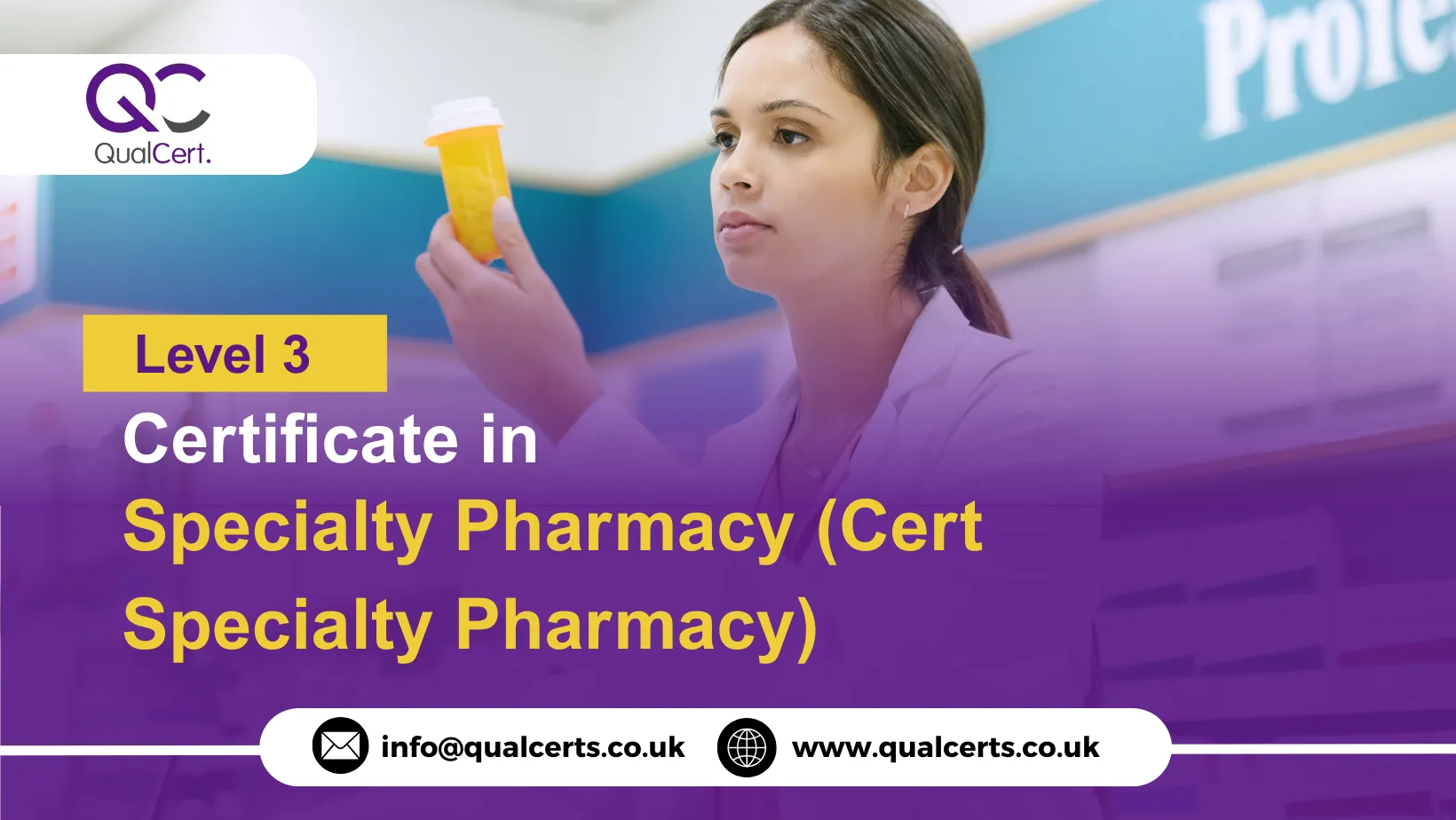
The QualCert Level 3 Certificate in Specialty Pharmacy (Cert Specialty Pharmacy) is a specialised qualification designed for healthcare professionals seeking to enhance their knowledge and expertise in the management of complex medications and therapies. This course provides learners with a comprehensive understanding of specialty pharmacy practice, including the safe handling, storage, and administration of high-cost, high-risk, or specialised medications.
Designed to support both practical application and professional development, the Level 3 Certificate equips learners with the skills required to optimise patient care, ensure compliance with regulatory standards, and contribute effectively to multidisciplinary healthcare teams. It is particularly suitable for pharmacy technicians, healthcare assistants, and professionals working in hospital, clinic, or community settings who wish to advance their expertise in specialty pharmacy and strengthen their Continuing Professional Development (CPD).
QualCert ensures that centres delivering this qualification maintain the highest standards of education. All centres must employ competent, qualified staff and provide access to the necessary learning materials, clinical resources, and training facilities. This guarantees a high-quality learning experience, enabling learners to achieve success and apply their knowledge confidently in professional practice.
Upon completion, learners will gain recognised certification, enhancing their professional credibility and career prospects in specialty pharmacy. This qualification represents a vital step for those committed to advancing their careers, developing specialist knowledge, and improving patient outcomes through safe and effective management of complex pharmaceutical therapies.
Course Contents of QualCert Level 3 Certificate in Specialty Pharmacy (Cert Specialty Pharmacy)
The QualCert Level 3 Certificate in Specialty Pharmacy (Cert Specialty Pharmacy), offers 20 Credits, requiring a Total Qualification Time (TQT) of 100 hours, including 70 Guided Learning Hours (GLH).
| Unit Ref# | Unit Title | Credit | GLH | TQT |
| QC30014-1 | Introduction to Specialty Pharmacy | 4 | 14 | 20 |
| QC30014-2 | Specialty Medication Management | 4 | 14 | 20 |
| QC30014-3 | Patient Assessment and Care Planning | 4 | 14 | 20 |
| QC30014-4 | Safe Practice and Compliance | 4 | 14 | 20 |
| QC30014-5 | Professional Practice and CPD | 4 | 14 | 20 |
Entry Requirements for the QualCert Level 3 Certificate in Specialty Pharmacy (Cert Specialty Pharmacy):
Minimum Age
- Learners must be at least 18 years old to enrol.
Educational Background
- Learners should ideally hold a Level 2 qualification in Health and Social Care, Pharmacy, or a related field. Relevant professional experience may also be considered.
Experience
- Prior experience in a pharmacy, clinical, or healthcare setting is recommended to support practical application of learning.
Language Proficiency
- Learners must have proficient English skills in reading, writing, and comprehension to fully engage with course materials and assessments.
Commitment to Continuing Professional Development (CPD):
- Learners should demonstrate a willingness to engage in Continuing Professional Development (CPD) to enhance their professional skills and career progression.
Access to Required Resources:
- Learners must have access to relevant learning materials, practical or clinical environments, and online platforms where applicable to successfully complete the course units.
Learning Outcomes for the QualCert Level 3 Certificate in Specialty Pharmacy (Cert Specialty Pharmacy):
Introduction to Specialty Pharmacy
- Understand the role and responsibilities of a pharmacy professional in specialty pharmacy
- Explain the principles of managing complex and high-risk medications
- Recognise the importance of patient-centred care in specialised therapy settings
- Identify key functions and processes in specialty pharmacy services
Specialty Medication Management
- Classify high-cost, high-risk, and specialised medications
- Explain safe handling, storage, and administration procedures
- Monitor patient adherence and assess treatment effectiveness
- Identify and manage potential risks associated with specialty medications
Patient Assessment and Care Planning
- Conduct assessments for patients requiring specialised therapies
- Identify individual medication and treatment needs
- Develop personalised care plans following clinical guidelines
- Evaluate patient outcomes and adjust care plans safely and ethically
Safe Practice and Compliance
- Apply safe handling and administration procedures for specialty medications
- Recognise and prevent medication errors and adverse events
- Comply with legal, ethical, and professional standards in pharmacy practice
- Understand clinical governance and quality assurance processes in specialty pharmacy
Professional Practice and CPD
- Understand professional responsibilities and accountability in specialty pharmacy
- Communicate effectively with patients, carers, and healthcare teams
- Maintain accurate records and uphold patient confidentiality
- Commit to continuous professional development (CPD) and lifelong learning
The Course is ideal for :
- Healthcare professionals seeking to specialise in specialty pharmacy and the management of complex therapies
- Pharmacy technicians, assistants, and support staff aiming to enhance their knowledge of high-risk or high-cost medications
- Professionals working in hospital, clinic, or community pharmacy settings who want to improve patient care and treatment outcomes
- Individuals looking to strengthen their Continuing Professional Development (CPD) and advance their career prospects
- Learners seeking a recognised qualification to demonstrate competence and professional credibility in specialty pharmacy
- Healthcare practitioners committed to advancing their skills and contributing to safe and effective patient management
- Qualified Staff: Centres must employ competent and qualified trainers with relevant experience in specialty pharmacy or healthcare.
- Learning Resources: Access to up-to-date textbooks, digital learning materials, and practical resources is essential.
- Training Facilities: Adequate classroom space, clinical simulation areas, or relevant practical environments must be available.
- Assessment Tools: Centres must provide valid and reliable assessment materials to evaluate learner knowledge and skills.
- Health & Safety Compliance: All facilities must comply with local health, safety, and accessibility regulations.
- CPD Support: Centres should encourage and support learners’ Continuing Professional Development throughout the course.
- Technology Access: Learners must have access to computers, internet, and online learning platforms if required.
- Quality Assurance: Centres must implement internal quality assurance procedures to ensure consistent, high-standard delivery and learner success.