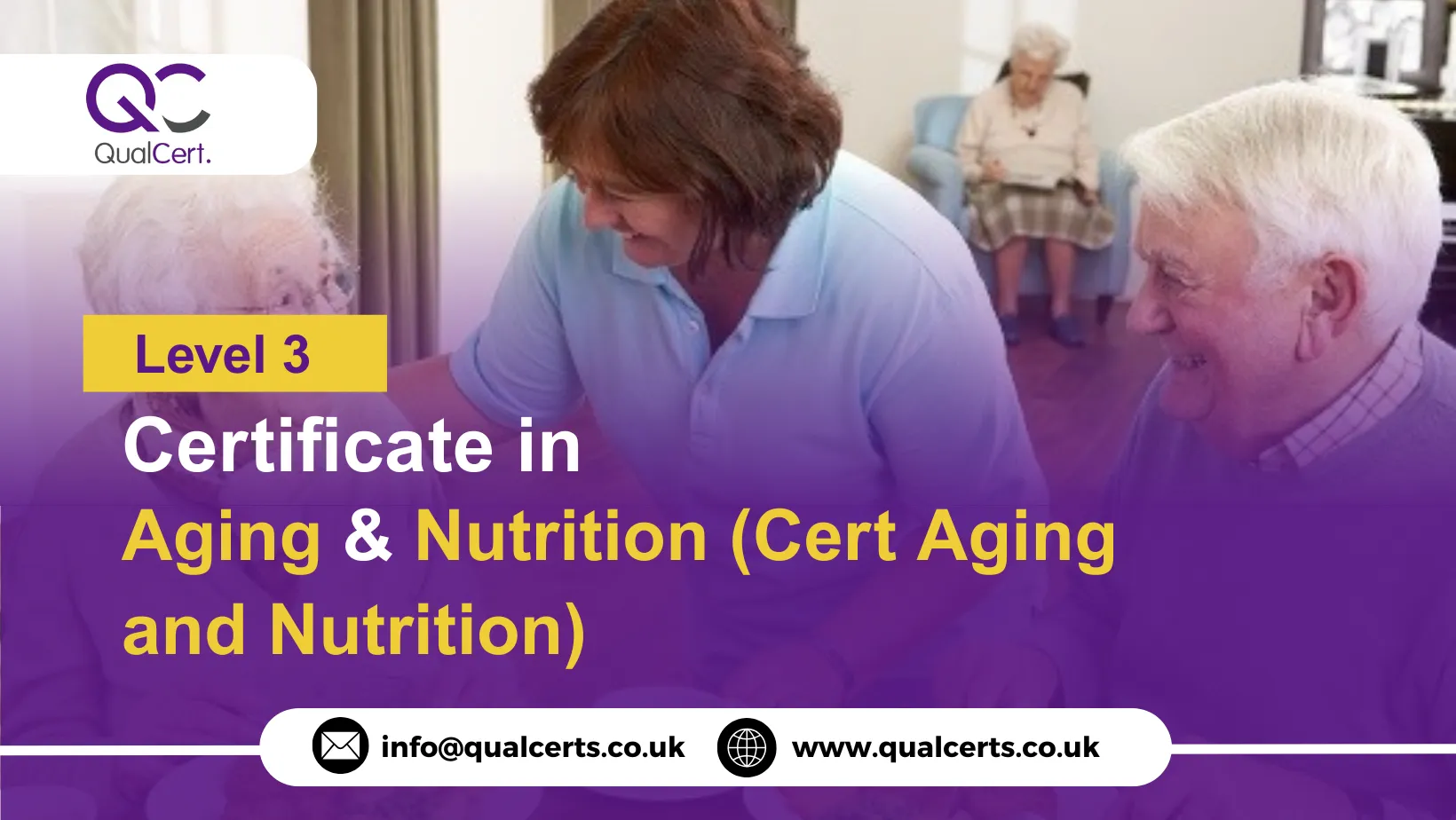
The QualCert Level 3 Certificate in Aging and Nutrition (Cert Aging and Nutrition) is a specialised qualification designed to provide learners with comprehensive knowledge and skills in nutrition for older adults. This course focuses on understanding the physiological, psychological, and social aspects of aging and how these factors influence nutritional needs, dietary planning, and overall wellbeing.
QualCert Level 3 Certificate in Aging and Nutrition (Cert Aging and Nutrition) is specifically aimed at professionals who wish to enhance their career prospects, expand their knowledge, and advance their Continuing Professional Development (CPD). It is ideal for healthcare workers, care home staff, dietetic assistants, nutritionists, and other professionals working with the aging population who want to develop evidence-based strategies for nutritional assessment, dietary interventions, and promoting healthy aging.
Centres delivering this qualification must ensure they have competent and qualified staff, along with access to all necessary learning materials, practical resources, and facilities to provide high-quality training. This ensures that learners gain both theoretical knowledge and practical skills applicable in professional settings, enabling them to deliver effective nutritional care for older adults.
Upon successful completion of this course, learners will be able to assess the nutritional needs of older adults, implement appropriate dietary strategies, and apply best practices to support health, independence, and quality of life. This qualification not only enhances professional competence but also opens pathways for further study and career progression in geriatrics, healthcare, nutrition, and related sectors.
Course Contents of QualCert Level 3 Certificate in Aging and Nutrition (Cert Aging and Nutrition):
The QualCert Level 3 Certificate in Aging and Nutrition (Cert Aging and Nutrition), offers 20 Credits, requiring a Total Qualification Time (TQT) of 100 hours, including 70 Guided Learning Hours (GLH).
| Unit Ref# | Unit Title | Credit | GLH | TQT |
| QC29032-1 | Introduction to Aging and Nutrition | 4 | 14 | 20 |
| QC29032-2 | Physiological and Cognitive Changes in Aging | 4 | 14 | 20 |
| QC29032-3 | Nutritional Requirements and Assessment for Older Adults | 4 | 14 | 20 |
| QC29032-4 | Dietary Interventions and Health Promotion | 4 | 14 | 20 |
| QC29032-5 | Ethical, Legal, and Professional Considerations in Geriatric Nutrition | 4 | 14 | 20 |
Entry Requirements for the QualCert Level 3 Certificate in Aging and Nutrition (Cert Aging and Nutrition):
Minimum Age
- Learners must be at least 16 years old at the time of registration.
Educational Background
- A basic secondary education or equivalent is recommended.
- Prior knowledge in health, nutrition, biology, or social care is advantageous but not mandatory.
Experience
- No formal work experience is required, making the course accessible to fresh learners.
- Professionals working in healthcare, social care, or community settings will benefit from applying practical knowledge.
Language Proficiency
- Learners must demonstrate proficiency in English to engage effectively with course materials, assessments, and communication with trainers.
Commitment to Continuing Professional Development (CPD):
- Learners should be motivated to enhance their skills, apply knowledge in practical settings, and engage in lifelong learning.
- A commitment to professional growth and the application of evidence-based practice is essential.
Access to Required Resources:
- Learners should have access to a computer or digital device with internet connectivity for research, study, and assessments.
- Centres must provide up-to-date learning materials, practical resources, and facilities to ensure effective training and learner success.
Learning Outcomes for the QualCert Level 3 Certificate in Aging and Nutrition (Cert Aging and Nutrition):
Introduction to Aging and Nutrition
- Understand the principles of nutrition in older adults.
- Recognise the role of diet in promoting healthy aging and wellbeing.
- Identify factors affecting nutritional status in the aging population.
- Explain the importance of early intervention and preventative nutrition strategies.
Physiological and Cognitive Changes in Aging
- Analyse age-related changes in metabolism, digestion, and nutrient absorption.
- Understand cognitive and sensory changes and their impact on dietary intake.
- Identify common health challenges in older adults that affect nutrition.
- Recognise strategies to support nutritional needs considering physiological changes.
Nutritional Requirements and Assessment for Older Adults
- Assess nutritional needs using evidence-based methods and tools.
- Monitor dietary intake and evaluate nutritional status effectively.
- Identify risk factors for malnutrition and related health complications.
- Apply appropriate strategies to meet individual nutritional requirements.
Dietary Interventions and Health Promotion
- Plan and implement dietary interventions to enhance health and wellbeing.
- Promote hydration, functional foods, and nutrient-dense diets.
- Evaluate the effectiveness of nutritional interventions in older adults.
- Support adherence to dietary guidance through practical and personalised strategies.
Ethical, Legal, and Professional Considerations in Geriatric Nutrition
- Understand professional responsibilities and ethical principles in elderly care.
- Apply legal and regulatory requirements related to nutrition and feeding in older adults.
- Ensure safe, high-quality nutritional care within clinical, community, or home settings.
- Demonstrate professionalism and ethical practice when working with older adults and multidisciplinary teams.
The QualCert Level 3 Certificate in Aging and Nutrition (Cert Aging and Nutrition) is designed for a wide range of learners who wish to develop expertise in nutrition for older adults. This qualification is ideal for:
- Healthcare Professionals
- Nurses, care assistants, dietetic assistants, and allied health professionals working with older adults.
- Individuals seeking to enhance their knowledge and provide evidence-based nutritional care in clinical or community settings.
- Social Care and Residential Home Staff
- Care home managers, support workers, and home carers responsible for planning and delivering meals to older adults.
- Professionals aiming to improve dietary practices, hydration, and overall wellbeing in residential care environments.
- Nutrition and Dietetics Learners
- Students or aspiring nutritionists seeking a foundational understanding of geriatric nutrition.
- Learners interested in specialising in aging, health promotion, and disease prevention.
- Public Health and Community Workers
- Professionals involved in community health initiatives, wellness programmes, or outreach services for older adults.
- Individuals promoting healthy eating and lifestyle interventions tailored to aging populations.
- Fitness, Wellness, and Lifestyle Practitioners
- Personal trainers, wellness coaches, and lifestyle consultants looking to integrate geriatric nutrition knowledge into their programmes.
- Learners Seeking CPD and Career Advancement
- Professionals aiming to enhance career prospects and achieve recognised qualifications in nutrition and aging care.
- Individuals committed to lifelong learning and professional development in healthcare, nutrition, and gerontology.
- General Learners with Interest in Aging and Health
- Beginners or fresh learners who wish to understand dietary needs and nutrition strategies for older adults.
- Individuals looking to apply nutritional knowledge in personal or professional contexts.
Centres delivering the QualCert Level 3 Certificate in Aging and Nutrition (Cert Aging and Nutrition) must ensure the following to provide high-quality training and support learner success:
- Qualified and Competent Staff
- Trainers and assessors must hold relevant qualifications in nutrition, gerontology, healthcare, or related fields.
- Staff should have practical experience working with older adults and knowledge of geriatric nutrition principles.
- Learning Resources and Facilities
- Access to up-to-date learning materials, textbooks, research papers, and digital resources related to aging and nutrition.
- Classrooms or training environments must be equipped to support both theoretical and practical learning.
- Centres offering online or blended delivery must provide reliable digital platforms for learners.
- Assessment and Quality Assurance
- Centres must have qualified assessors and implement internal quality assurance (IQA) processes to maintain consistent assessment standards.
- Secure systems for storing learner records, assessment evidence, and certification documentation are required.
- Learner Support
- Provision of guidance, mentoring, and feedback to support learners in achieving their qualification.
- Access to career advice and professional development support to enhance progression opportunities.
- Health, Safety, and Accessibility
- Training venues and facilities must comply with health and safety regulations.
- Learning environments should be inclusive and accessible for all learners, including those with additional needs.
- Commitment to Continuous Improvement
- Centres should regularly review and update delivery methods, resources, and assessments to maintain high standards.
- Staff must engage in Continuing Professional Development (CPD) to ensure up-to-date knowledge and effective teaching practices.