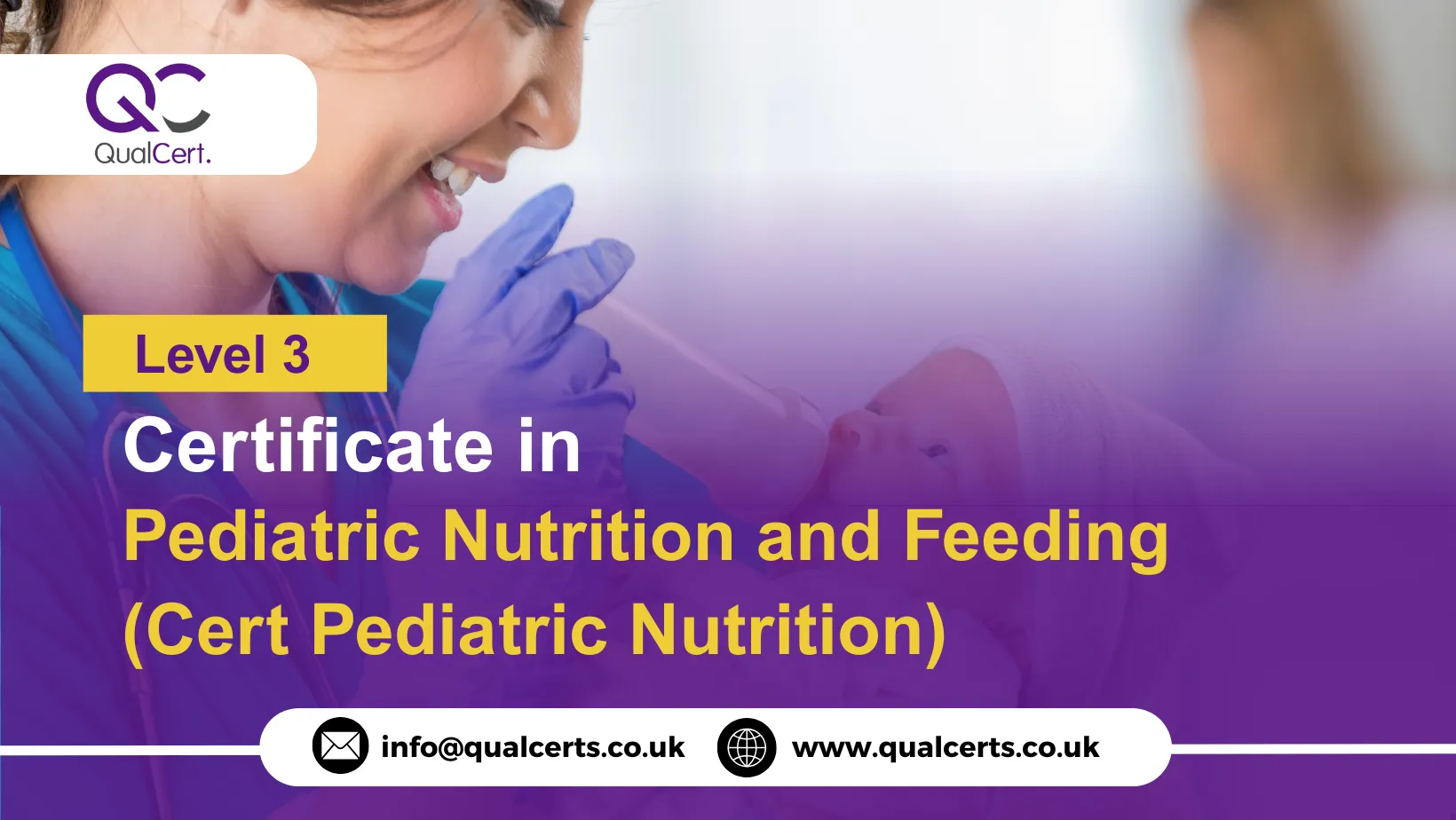
The QualCert Level 3 Certificate in Pediatric Nutrition and Feeding (Cert Pediatric Nutrition) is a specialised qualification designed to provide learners with the knowledge and skills necessary to support the nutritional needs of infants, children, and young people. This course equips learners with a comprehensive understanding of child growth, development, feeding practices, and nutritional interventions that promote optimal health and wellbeing.
This qualification is specifically aimed at professionals who wish to enhance their career prospects, broaden their knowledge, and advance their Continuing Professional Development (CPD). It is ideal for healthcare practitioners, paediatric nurses, dietetic assistants, childcare professionals, and other individuals working with children who seek to develop evidence-based strategies for nutritional assessment, feeding, and care.
Centres delivering this qualification must ensure they have competent and qualified staff, as well as access to all necessary learning materials, practical tools, and resources to provide high-quality training. This guarantees that learners acquire both theoretical knowledge and practical skills applicable to professional settings.
Upon successful completion of this course, learners will be able to assess the nutritional requirements of children, implement appropriate feeding strategies, and apply best practices to support child growth and development. This qualification not only enhances professional competence but also provides a pathway for further study and career progression in paediatric nutrition, healthcare, and related sectors.
Course Contents of QualCert Level 3 Certificate in Pediatric Nutrition and Feeding (Cert Pediatric Nutrition):
The QualCert Level 3 Certificate in Pediatric Nutrition and Feeding (Cert Pediatric Nutrition), offers 20 Credits, requiring a Total Qualification Time (TQT) of 100 hours, including 70 Guided Learning Hours (GLH).
| Unit Ref# | Unit Title | Credit | GLH | TQT |
| QC29031-1 | Introduction to Pediatric Nutrition | 4 | 14 | 20 |
| QC29031-2 | Growth, Development, and Nutritional Needs | 4 | 14 | 20 |
| QC29031-3 | Feeding Practices and Techniques | 4 | 14 | 20 |
| QC29031-4 | Nutritional Interventions for Pediatric Conditions | 4 | 14 | 20 |
| QC29031-5 | Ethical, Legal, and Professional Considerations in Pediatric Nutrition | 4 | 14 | 20 |
Entry Requirements for the QualCert Level 3 Certificate in Pediatric Nutrition and Feeding (Cert Pediatric Nutrition):
Minimum Age
- Learners must be at least 16 years old at the time of registration.
Educational Background
- A basic secondary education or equivalent is recommended.
- Learners with prior knowledge in health, nutrition, biology, or child development will benefit from the course.
Experience
- No formal work experience is required, making the course accessible to fresh learners.
- Professionals working in healthcare, childcare, or community nutrition settings will also gain practical benefits.
Language Proficiency
- Learners must demonstrate proficiency in English to effectively engage with learning materials, assessments, and communications with trainers.
Commitment to Continuing Professional Development (CPD):
- Learners should be motivated to enhance their skills, apply knowledge in practical settings, and engage in lifelong learning.
- A commitment to professional growth and the application of evidence-based practice is essential.
Access to Required Resources:
- Learners should have access to a computer or digital device with internet connectivity for research, study, and assessments.
- Centres must provide up-to-date learning materials, practical resources, and facilities to ensure effective training and learner success.
Learning Outcomes for the QualCert Level 3 Certificate in Pediatric Nutrition and Feeding (Cert Pediatric Nutrition):
Unit 1: Introduction to Pediatric Nutrition
- Understand the key concepts and principles of pediatric nutrition.
- Recognise the role of nutrition in growth, development, and overall health.
- Identify factors that influence child nutrition, including biological, social, and environmental determinants.
- Explain the importance of early nutritional interventions in supporting lifelong health.
Unit 2: Growth, Development, and Nutritional Needs
- Assess normal growth and developmental milestones in children.
- Understand macronutrient and micronutrient requirements at various pediatric stages.
- Analyse hydration and energy needs for infants, children, and adolescents.
- Apply knowledge to plan age-appropriate nutritional strategies.
Unit 3: Feeding Practices and Techniques
- Understand different feeding methods, including breastfeeding, formula feeding, and complementary feeding.
- Apply appropriate feeding techniques for infants and young children.
- Identify and manage common feeding challenges, including allergies and intolerances.
- Evaluate feeding practices to ensure nutritional adequacy and safety.
Unit 4: Nutritional Interventions for Pediatric Conditions
- Identify dietary strategies for managing common pediatric health conditions.
- Plan and implement evidence-based nutritional interventions.
- Monitor, evaluate, and adjust nutritional programmes for effectiveness.
- Integrate nutritional care within clinical or community settings safely and professionally.
Unit 5: Ethical, Legal, and Professional Considerations in Pediatric Nutrition
- Understand ethical principles and professional responsibilities in pediatric nutrition practice.
- Apply legal frameworks and guidelines relevant to child nutrition and feeding.
- Promote safe, high-quality, and evidence-based nutritional care.
- Demonstrate professional behaviour when working with children, families, and multidisciplinary teams.
The QualCert Level 3 Certificate in Pediatric Nutrition and Feeding (Cert Pediatric Nutrition) is designed for a broad range of learners who wish to develop expertise in child nutrition and feeding practices. This qualification is ideal for:
- Healthcare Professionals
- Paediatric nurses, dietetic assistants, and healthcare workers seeking to enhance their knowledge in child nutrition.
- Professionals aiming to provide evidence-based nutritional care in clinical or community settings.
- Childcare and Early Years Practitioners
- Nursery staff, childcare assistants, and educators working with infants and children.
- Individuals wanting to implement healthy feeding practices and nutritional guidance within childcare settings.
- Nutrition and Dietetics Learners
- Students and aspiring nutritionists seeking foundational knowledge in pediatric nutrition.
- Learners aiming to pursue further study or professional development in nutrition and dietetics.
- Public Health and Community Workers
- Professionals involved in community health, child welfare, or nutrition programmes.
- Individuals promoting healthy eating, feeding practices, and nutritional interventions for children.
- Fitness and Wellness Practitioners
- Professionals wishing to integrate child nutrition knowledge into family-focused wellness programmes.
- Learners Seeking CPD and Career Advancement
- Professionals from various sectors seeking recognised qualifications to enhance career prospects.
- Individuals committed to lifelong learning and professional growth in pediatric nutrition and health.
- General Learners with Interest in Child Health
- Beginners or fresh learners keen to understand feeding practices, nutrition, and wellbeing of children.
- Individuals looking to apply nutritional knowledge in personal or professional contexts.
Centres delivering the QualCert Level 3 Certificate in Pediatric Nutrition and Feeding (Cert Pediatric Nutrition) must ensure the following to provide high-quality training and support learner success:
- Qualified and Competent Staff
- Trainers and assessors must hold relevant qualifications in nutrition, pediatric health, or related fields.
- Staff should have practical experience in child nutrition, feeding practices, or healthcare settings.
- Learning Resources and Facilities
- Access to up-to-date learning materials, textbooks, research papers, and digital resources related to pediatric nutrition and feeding.
- Classrooms or training environments must be equipped to support both theoretical and practical learning.
- Reliable online platforms for blended or fully online delivery, if applicable.
- Assessment and Quality Assurance
- Centres must have qualified assessors and implement internal quality assurance (IQA) processes to maintain assessment standards.
- Secure systems must be in place to store learner records, assessment evidence, and certification documentation.
- Learner Support
- Provision of guidance, mentoring, and feedback to help learners achieve their qualification.
- Access to career advice and professional development support to enhance progression opportunities.
- Health, Safety, and Accessibility
- Training venues and facilities must comply with health and safety regulations.
- Learning environments must be inclusive and accessible to accommodate all learners.
- Commitment to Continuous Improvement
- Centres should regularly review and update delivery methods, resources, and assessments.
- Staff must engage in Continuing Professional Development (CPD) to maintain high teaching and assessment standards.